







A Year of Abundance: Reflections on Of the Sun
Xelena González practices the healing arts through creative writing and movement, centering self-love in her multi-disciplinary workshops for all ages. Her picture book Of the Sun is an uplifting and mighty poem for the Indigenous children of the Americas. In this post, Xelena reflects on using poetry and music to connect young readers with Indigenous foodways, while exploring the enduring importance of food sovereignty, cultural connection, and care for the land. You can hear Xelena further discuss the themes within Of the Sun in this interview with Texas Public Radio.
Corn, avocado, squash, and tomatoes,
Chocolate, vanilla, beans, and potatoes.
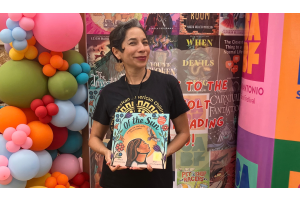
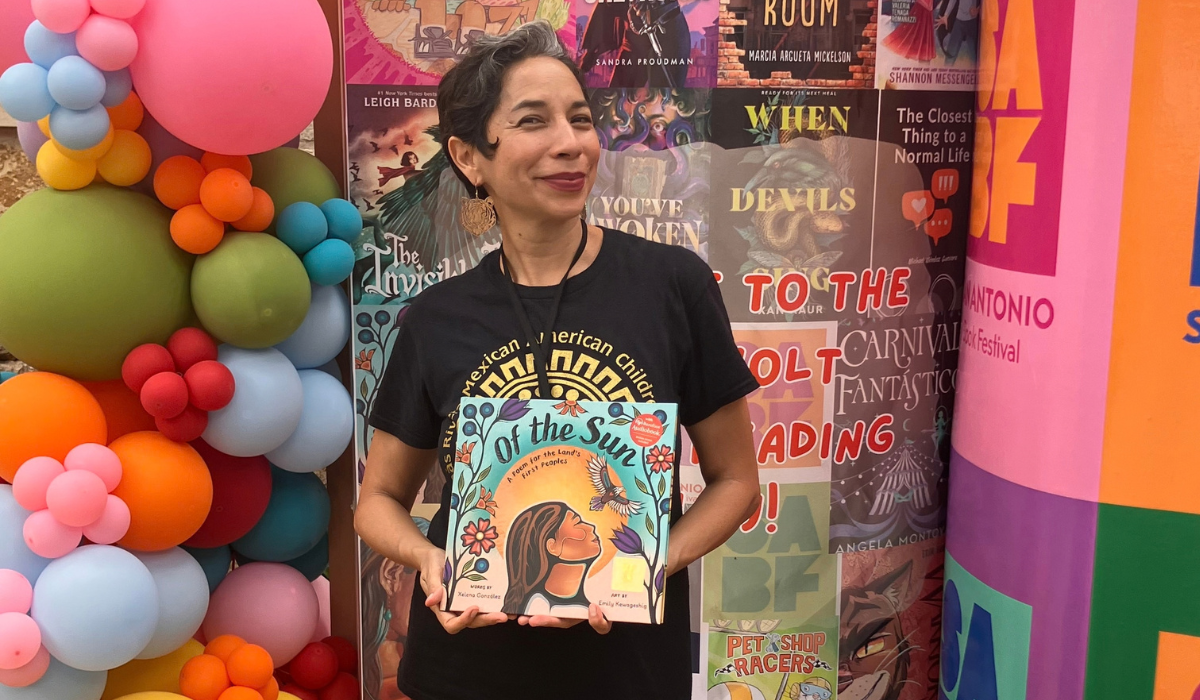
This delicious list has been sung by hundreds of kids over the past year as I have traveled to various communities in support of my fourth picture book Of the Sun: A Poem for the Land’s First Peoples. As evidenced within these lines, the poem carries a rhyme that delights listeners of all ages. After reading the book at a leisurely pace, which allows viewers to soak up Emily Kewagashig’s stunning illustrations, I will offer to share the poem a second time in its original spoken word form.
This is where the lovers of hip hop come into play. I pull them into the mix by asking for any beatboxers to step up to the mic, or more often, encouraging the whole audience to keep a beat with hand-clapping and drum-tapping (on their own laps or table tops). Except for a few hilarious fails, the experience is fun and unforgettable, lifting the vibration of the space as everyone becomes a part of the music. Rather than explaining what poetry is, we collectively express and experience what it can be.
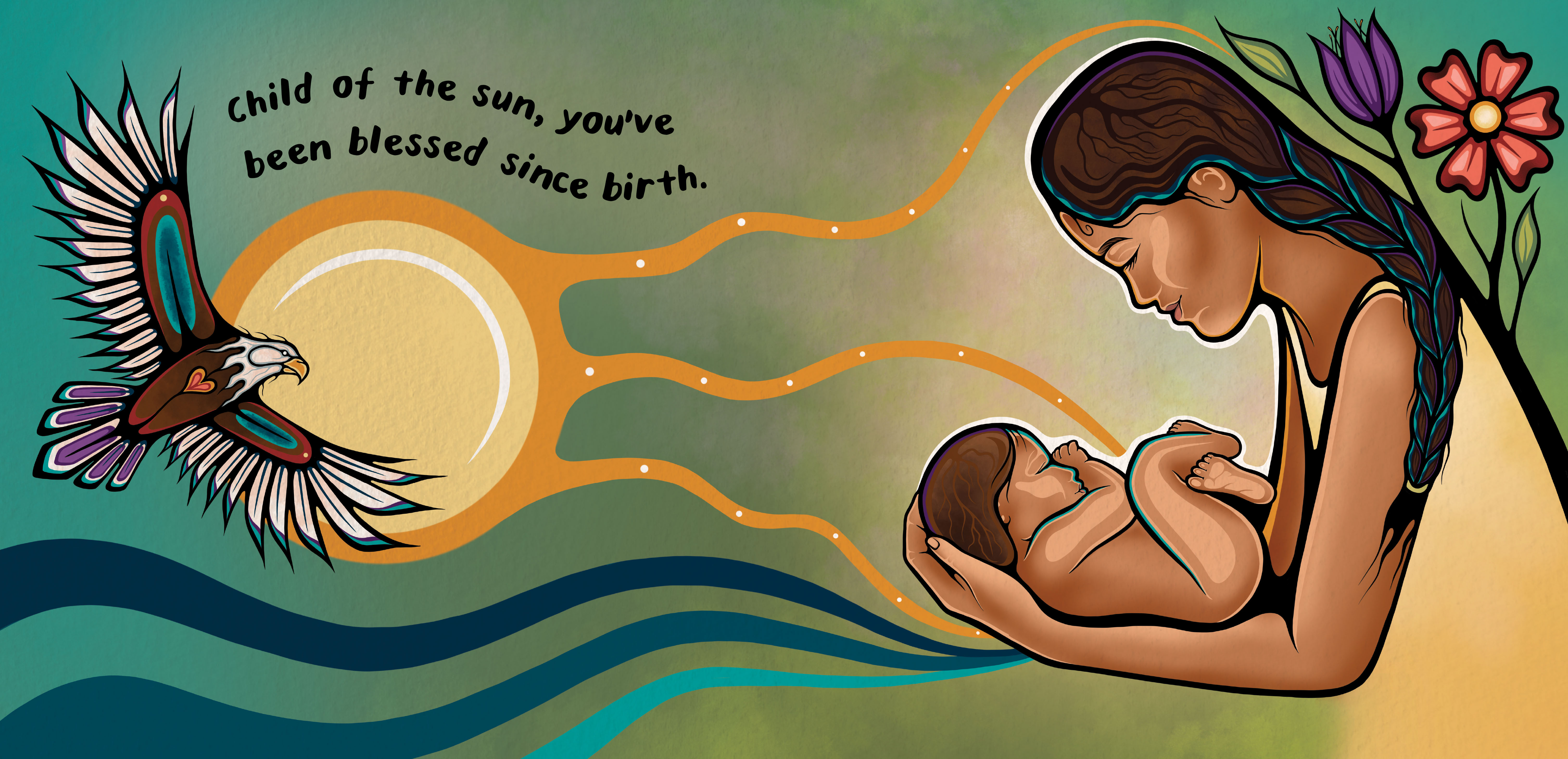
Taking this experiment a step further, I will then highlight the two lines above and ask the audience to recite them – one half of the room at a time. Nothing amplifies a school gymnasium or cafeteria faster than a mini rap battle that volleys back-and-forth. The goal is to have a good time, of course, but the takeaway runs deeper because these young readers/rappers will not soon forget this list of food that our Native ancestors cultivated on this land. And of course there are many more foods that did not fit into the poem: peanuts, pineapples, papayas, and peppers to name a few. (Alliteration, anyone?)
Our land’s First Peoples cultivated so many foods that our planet was completely revolutionized upon the “discovery of the Americas.” Earth had never before (or since) experienced such a growth in human population. Native Americans quite literally fed the world. Fast forward to modern day USA where the faces of those who continue to cultivate our food bear a clear resemblance to our Native ancestors. Yet it is their brown skin and indigenous features that have also made them targets of ferocious immigration raids designed to fill our emptying prisons and enrich a greedy incarceration industry.

My first public event for Of the Sun took place in Chicago on the same day ICE moved into the city with brutal force. In the ensuing year, teachers from various states have told me how vital our book has been in offering words – when there are no words – to express the heartache of losing students overnight. Activists have written to let me know they have read our book at detention centers like the one in Dilley, Texas. All of this speaks to the power of books to shift mindsets and heal hearts.
At a time when many of us feel powerless against waves of injustice sweeping across our land, my humble hope is that any reader who resembles the beautiful brown children Emily has painted onto our pages can feel more confidently connected to this land, feel blessed by the sun overhead and held by the earth below.

As we begin to celebrate Hispanic Heritage, followed by Native American Heritage, then Thanksgiving, I hope we can all keep in mind the honor and care required to cultivate such a bounty of food over centuries. To understand and appreciate how our food continues to arrive at our tables safely. And when that safety is continuously breached, I hope we can turn serious attention to food sovereignty, which is inherent in many indigenous communities and land-back movements. (Please see the resources in the back of our book for more on these topics.)
Our book is now one year old and growing new skin in paperback form. A whole cycle of crops emerged from my garden in that time: okra, eggplant, watermelon, squash, peppers, cabbage, asparagus, spinach, and more. With each new bloom over time, I marvel at the richness of life and how abundantly our earth can provide for us all. Of course we humans must also do our part: for growing takes patience, making space, eliminating elements we do not need, watering, nurturing, giving thanks, and of course, allowing sunlight to work its magic.
About the Author
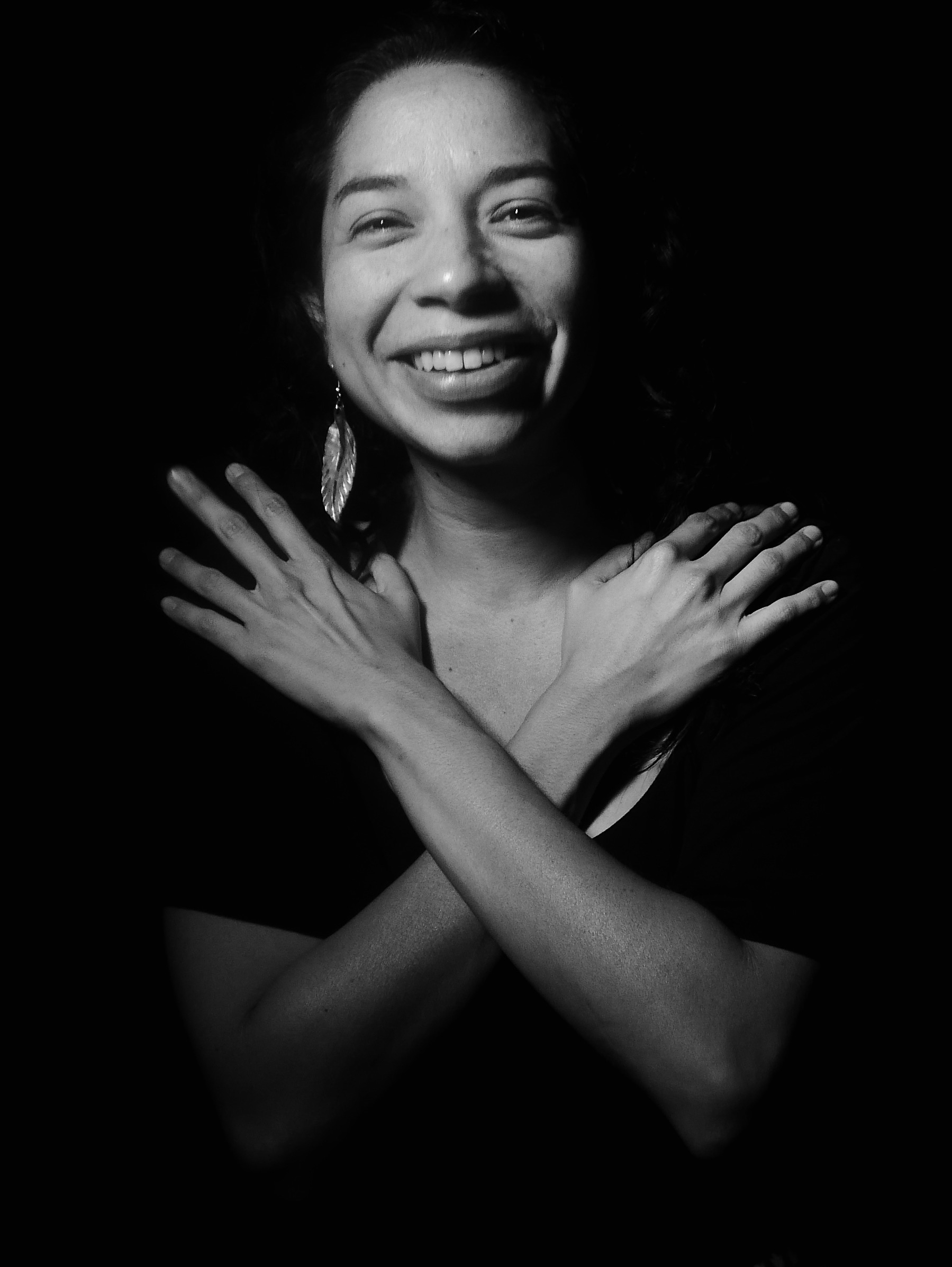
Xelena González practices the healing arts through creative writing and movement, centering self-love in her multi-disciplinary workshops for all ages. She manifested the oracle deck and guidebook Lotería Remedios plus several award-winning picture books, including Of the Sun, Remembering, Where Wonder Grows, and All Around Us.
Xelena was the Spring 2026 Artist-in-Residence at the International Folk Culture Center, where she explored embodied storytelling for joy and healing. She is currently a Visiting Scholar at the University of Texas in Austin, where she is completing a writing fellowship at the historic Dobie Paisano Ranch.
About the Book
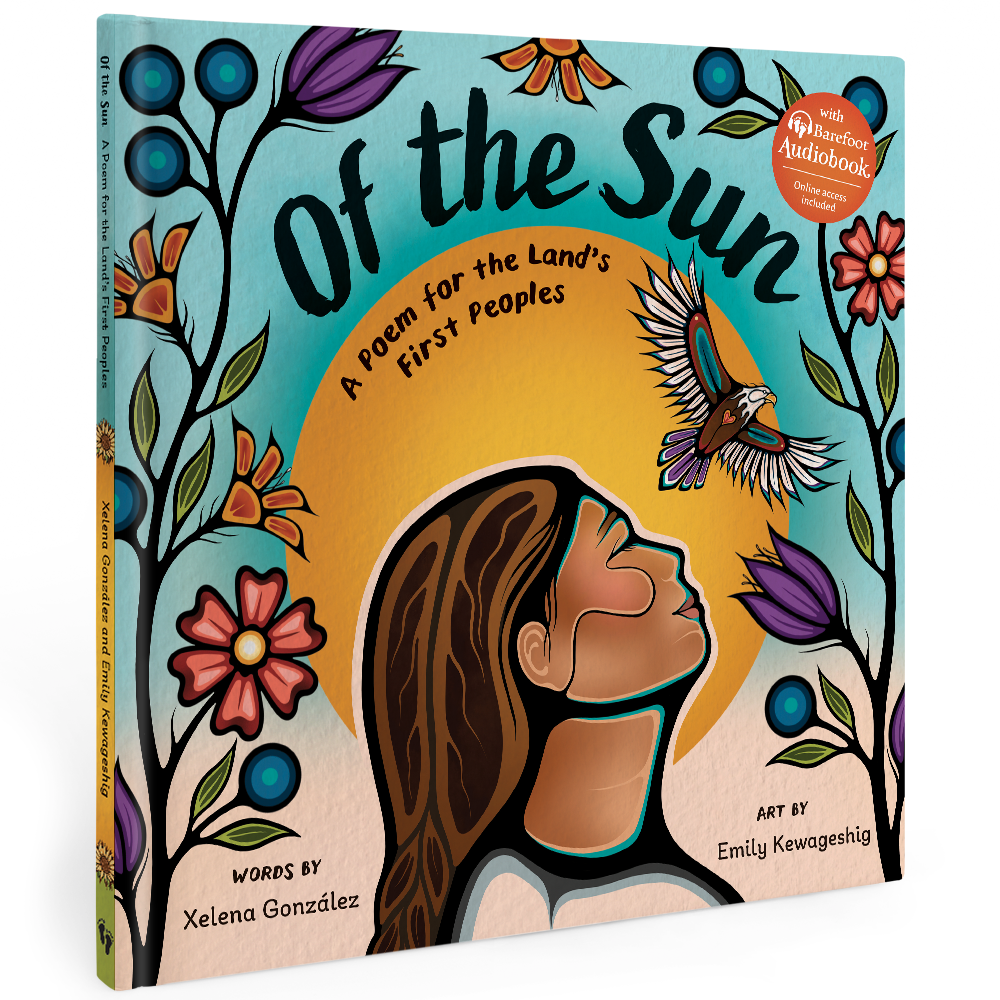
Of the Sun
Written by Xelena González Wehner
Illustrated by Emily Kewageshig
A 2026 Tomás Rivera Children's Book Award winner
A 2026 Américas Award Commended Title
An ALSC Notable Children's Books selection
New York Public Library’s Best Books for Kids of 2025
Featured on the NYPL's "Reading America: 250 Years, 250 Books" list