







The story behind My Dinosaur Shoes
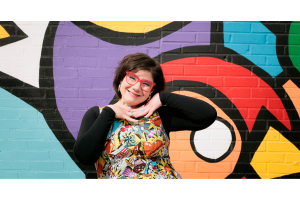
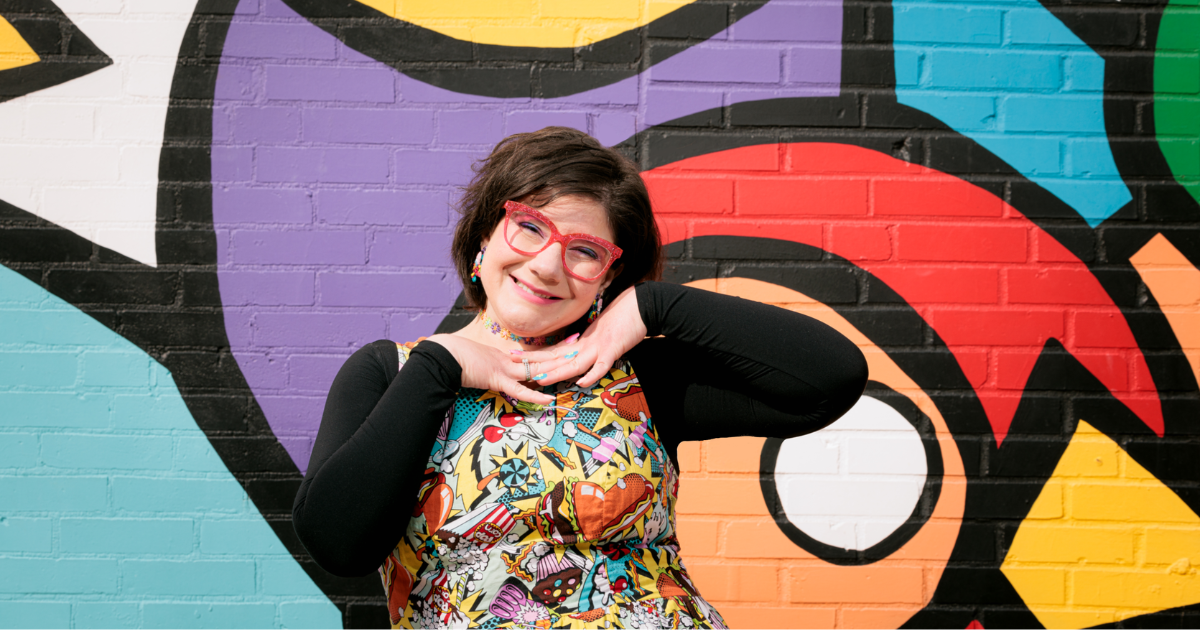
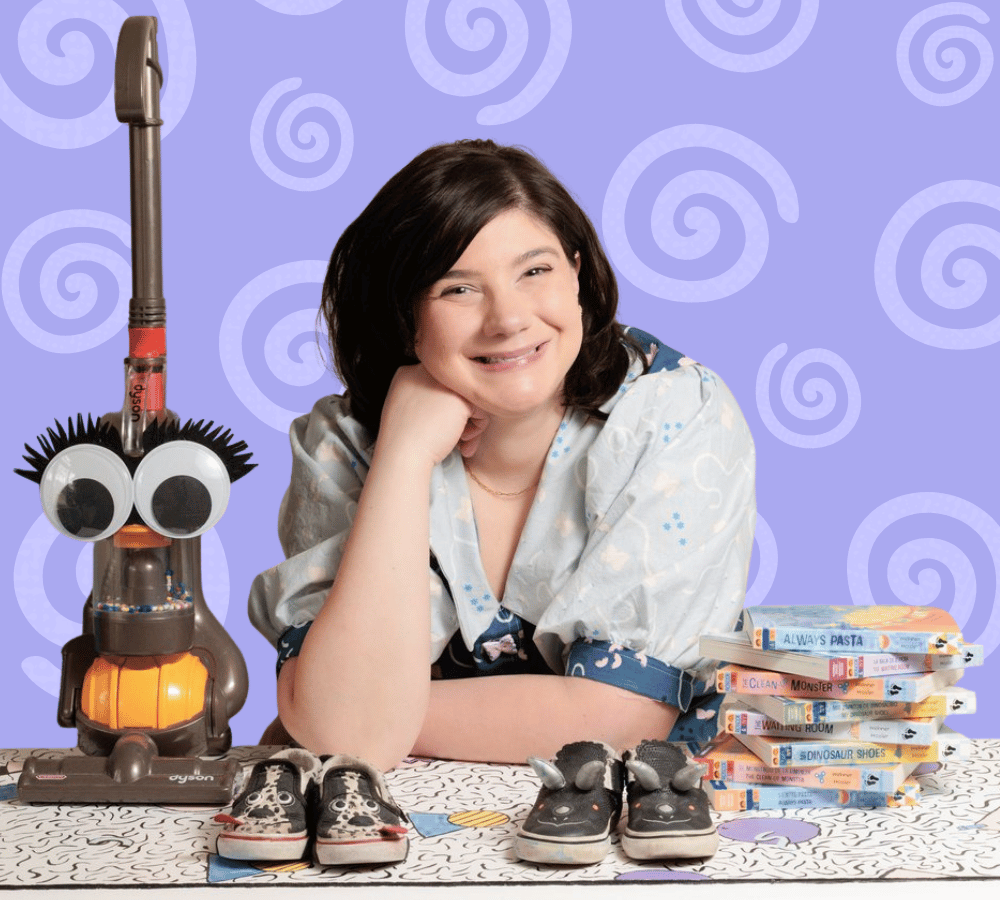
Eleni Tassopoulos Wehner is an AuDHD woman who writes to increase realistic representation of autistic and other neurodivergent children and their families. Her Roscoe & Ivy series (Barefoot Books, Autumn 2025) is inspired by real-life strategies she uses with her neurodivergent children. My Dinosaur Shoes is the first book in the series.
It starts with our oldest.
She is 3 years old. Holiday family photos are scheduled. It’s a “mini slot”, which means the whole session is only 15 minutes long. I attempt to place my nonspeaking child’s foot into her new boots – the ones that perfectly match her outfit. She kicks her foot and starts screaming. I’m frustrated. Why won’t she just TRY THEM ON? I keep trying for 20 minutes. She’s crying. I’m crying.
I give up, hoping my makeup hasn’t run down my face. She wears her sneakers with her red velvet dress. We make it to our now 13-minute-long photo session.
She wore those same iridescent Velcro sneakers every day. I was able to get them in the next 2 sizes up. Fortunately, my daughter had little feet, so liked different shoes by the time she outgrew the last pair of iridescent sneakers. Crisis averted.
Our middle child wasn’t bothered by new shoes. The new-shoes-debacle became one of those issues I forgot about completely – until the day our youngest threw a new shoe at me.
By this time, our two oldest children had been diagnosed autistic. Although the new-shoes-debacle never had a solution, many other things did. The more neurodivergent-kid-experienced version of me looked back at that family photo day with a different lens. I adapted my way of thinking since then and realized there was a reason he refused new shoes. He wasn’t being bratty or difficult; our youngest was truly upset by and even scared of the new shoes. But, why?
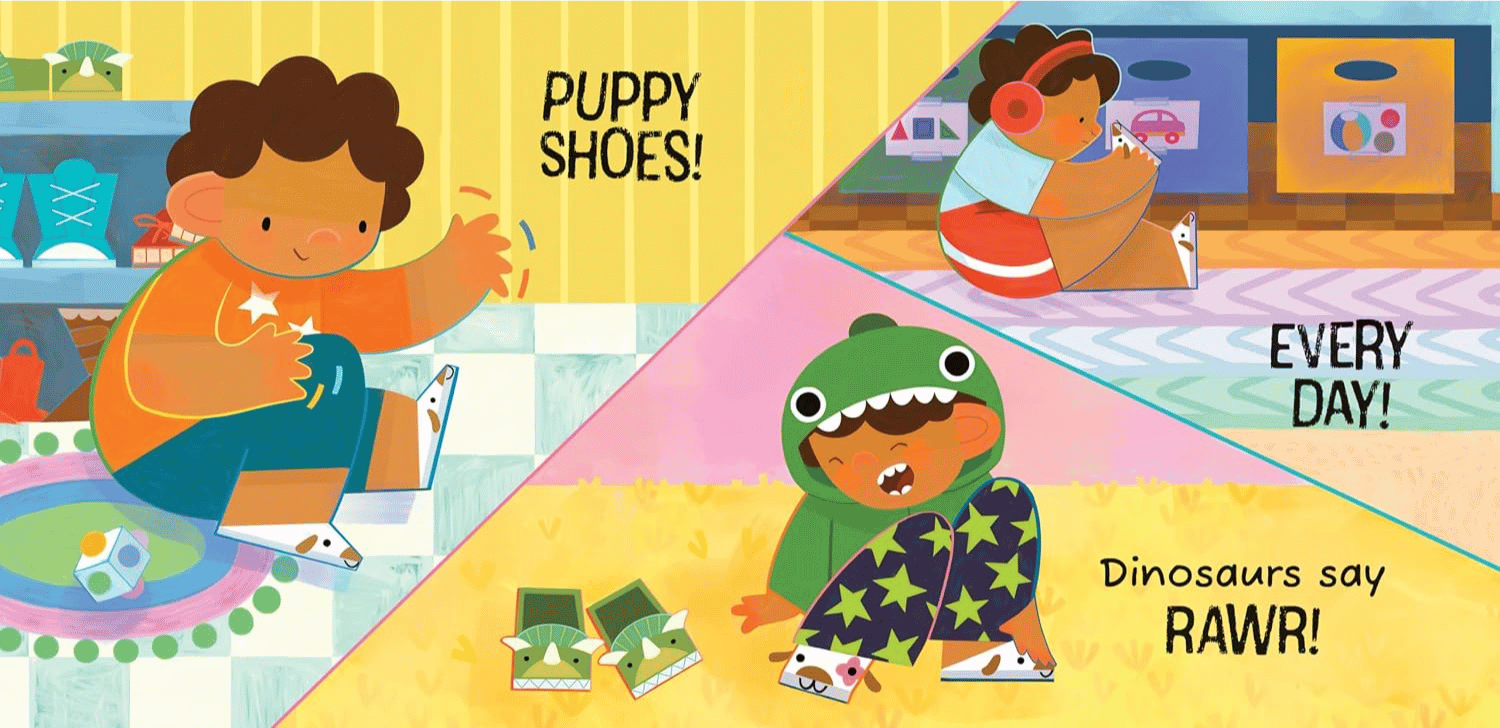
I thought and thought. Sensory issues? Nope. He didn’t even try them on. They were both Vans slip-on canvas shoes. The only difference? His current shoes looked like puppies and the new ones looked like dinosaurs. He didn’t particularly love puppies or dinosaurs (he was and is a monster truck kid), so I crossed that potential issue off. Fortunately, he hadn’t outgrown the puppy shoes yet. I had some time to think and investigate.
It had been 6 years since those family photos. Over time, there were countless situations that seemed nonsensical to anyone that wasn’t our kid. I thought back to when my middle child struggled with switching back to shorts for spring-summer and pants for fall-winter. Yes, the same one who was okay with different shoes. It wasn’t that my middle child didn’t like pants or shorts – it was the change.
I had nothing to lose. I put the dinosaur shoes right next to the puppies. I talked to him about the shoes only ONE time. At that point, he knew they were there and they were his. Pushing the new shoes would have only caused him to push back.
Days turned into weeks. I didn’t know if this would work. He eventually began to touch the shoes. Then days later, he picked them up for the first time. Until one amazing day, several weeks later, I saw him pick up the shoes on his own and slip them on. It was like there was never a problem to begin with.
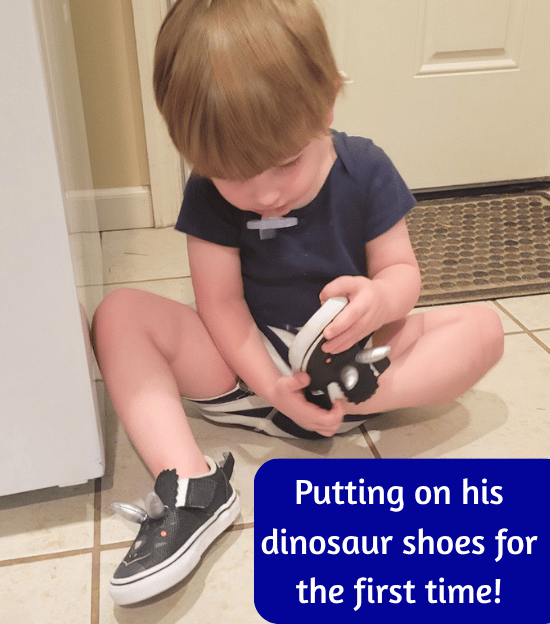
As caregivers, we want to fix things RIGHT AWAY. But, sometimes, the only things that can help the situation are time, lots of patience, and holiday photos with sneakers.
About the Author
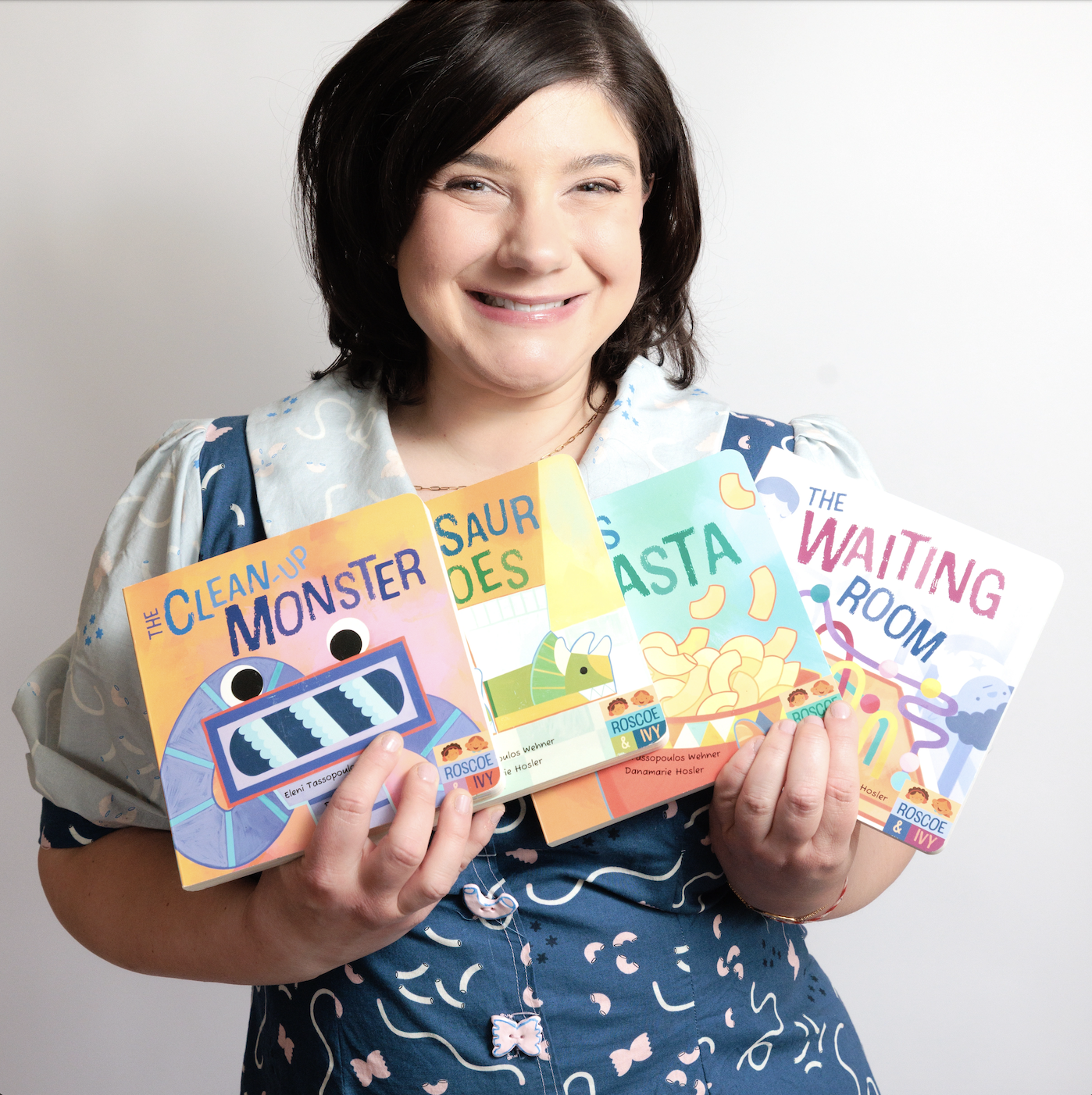
Eleni Tassopoulos Wehner is the author of the Roscoe & Ivy series (Barefoot Books, Autumn 2025), inspired by real-life strategies she uses with her neurodivergent children.
An AuDHD woman, she writes to increase realistic representation of autistic and other neurodivergent children and their families. Eleni lives with her husband and kids in Missouri, where their home is full of compassion, creativity, and laughter.
About the Book
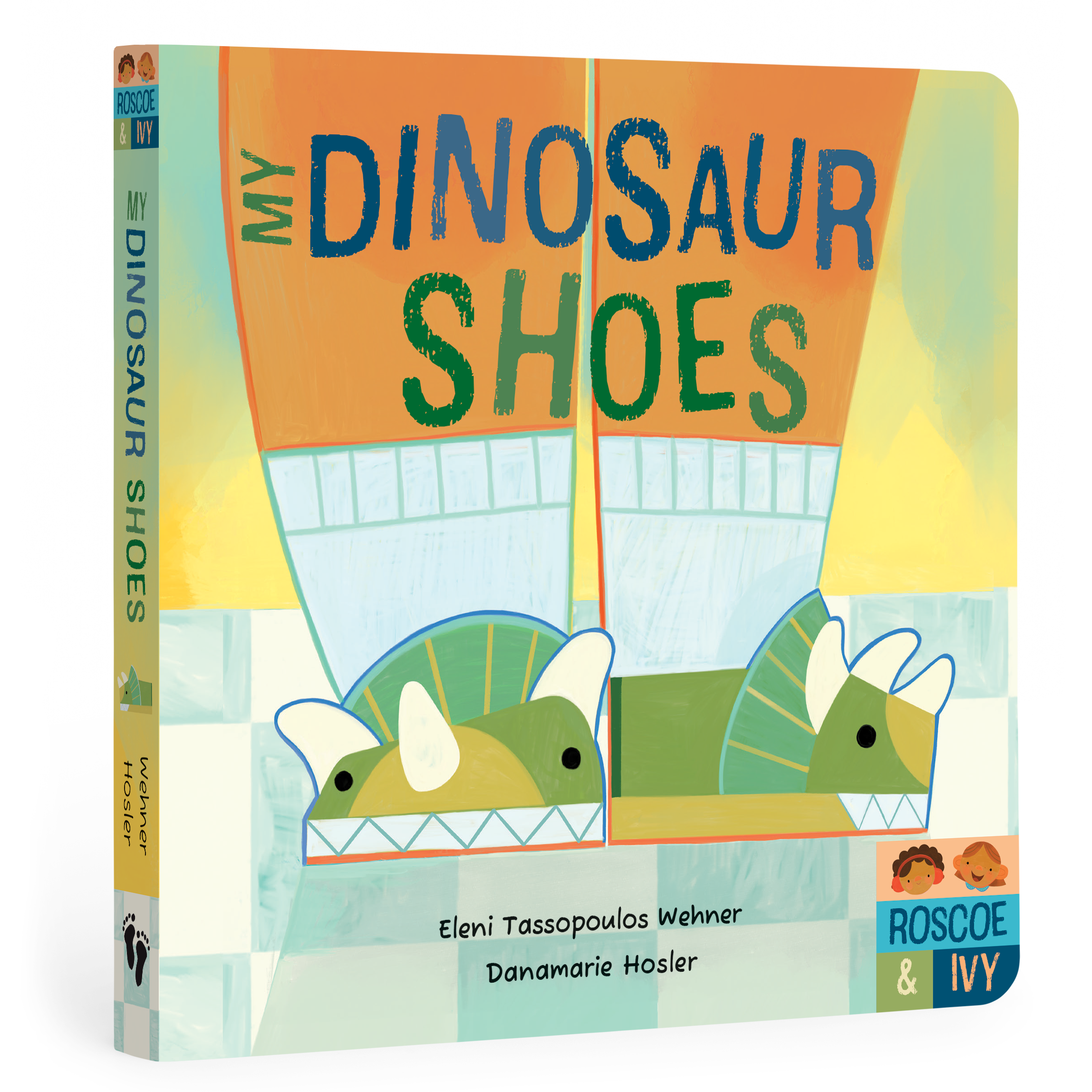
My Dinosaur Shoes
Written by Eleni Tassopoulos Wehner
Illustrated by Danamarie Hosler
★ "A strong addition from a neurodivergent author and illustrator that will resonate with many children and families"
– School Library Journal, starred review
"Through simple narrative, gentle modeling, and expressive character design, the neurodivergent creators provide tools for families, neurodivergent or not, to navigate everyday scenarios"
– The Horn Book Magazine