



Reflecting on the Inner Worlds of Children
Meghan Wilson Duff wanted to be a marine biologist when they grew up, but got distracted trying to figure out people and became a clinical psychologist. They published Alex and the Squid, their second picture book, with Barefoot Books in October, 2026. In this blog post, Meghan reflects on the complexity of childhood emotions and how children make sense of their experiences.
Life is complicated. The easy rules we teach children – don’t steal! – do not account for the complexity around us.
I remember watching my youngest child as he played, absorbed in the reverie of his imagination. He was clearly on some sort of adventure, and there were sharks involved. I was struck by how little we parents know about our children’s inner worlds and emotional lives. We’re often guessing. And yet I remember a welter of big and frequently confusing feelings I had in childhood, like the fear-spiked exhilaration of racing down an icy sledding hill completely out of control, skidding to a stop, letting my heart settle down, and then dragging myself breathless up the hill just to do it again. That big sledding hill from childhood? From my adult vantage point, it’s just a little hill.
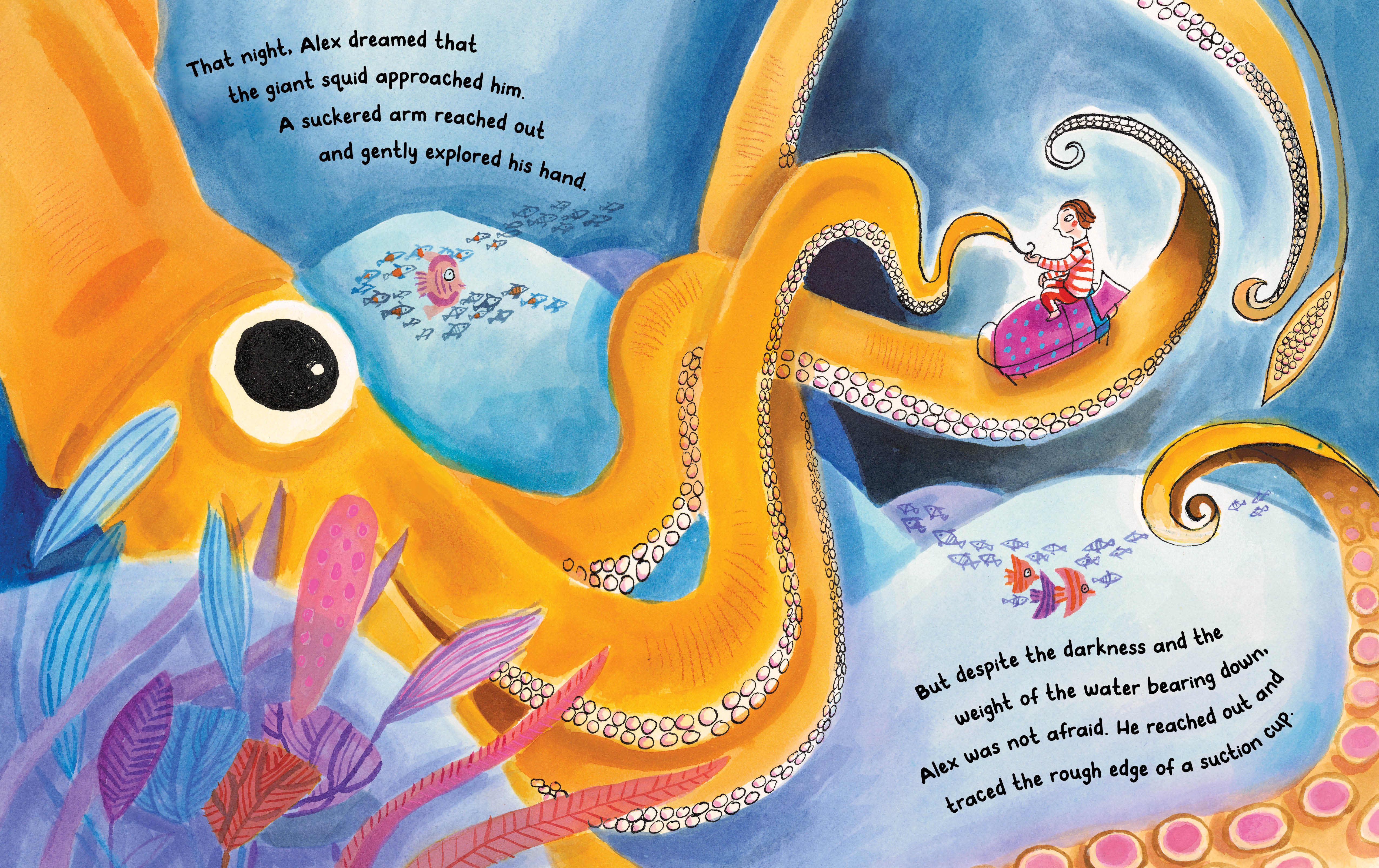
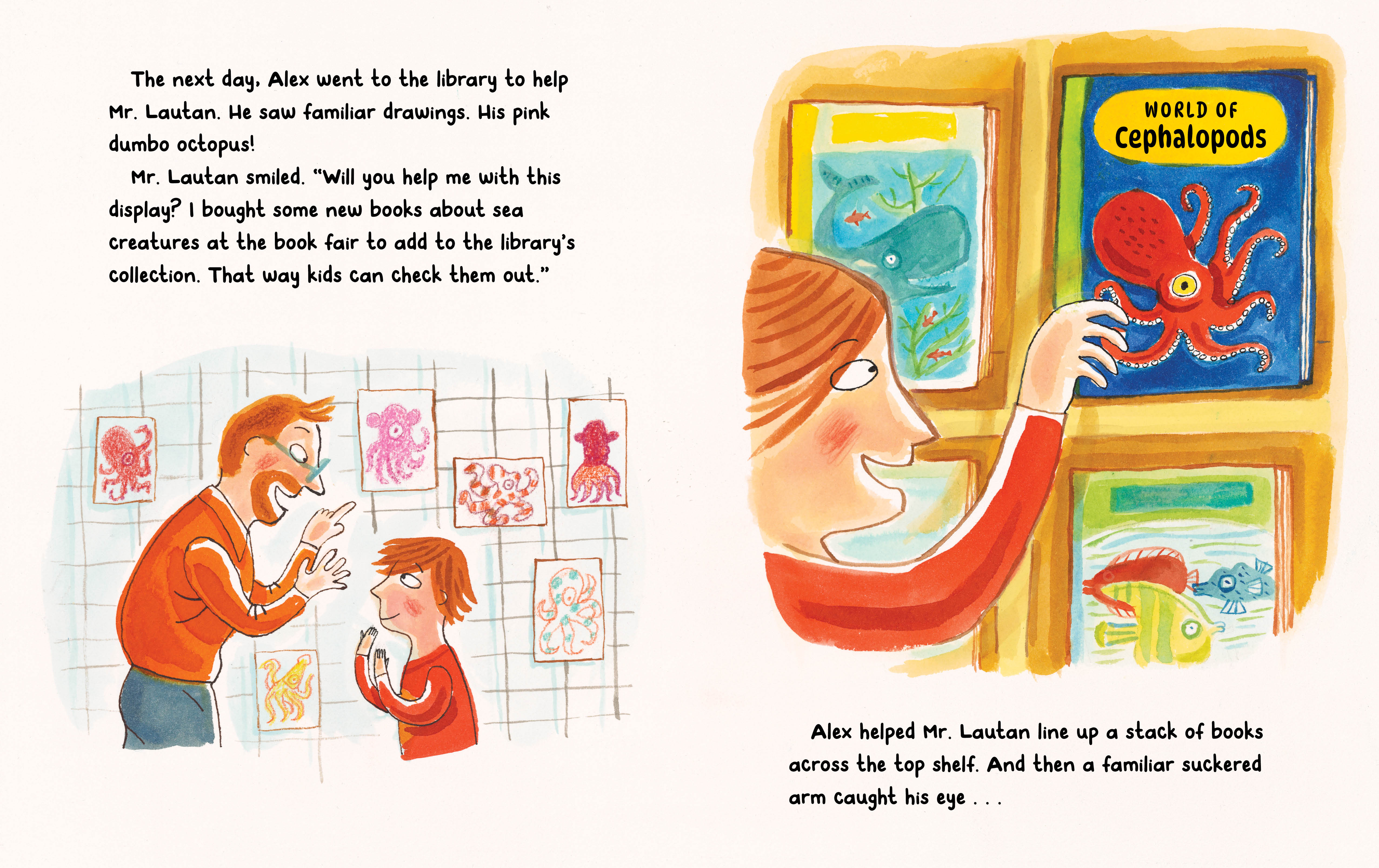
For all the times that we adults are around to guide kids through their early experiences, they navigate many more on their own, cobbling together how they feel and what they learned from experience and watching people around them respond and interact. When I wrote the story for Alex and The Squid I wanted Alex’s decisions and journey to be his own. No judgement. No recognition or praise. Though the reader might imagine that Mr. Lautan was pleased, having looked on.
“Mom, I feel guilty.”
When I was little, I walked into the kitchen and told my mom I felt guilty. She kept asking, “What did you do?” I was confused, so I further explained that it was my foot that felt guilty. My mom figured it out. She explained that feeling guilty is when you do something, realize it was wrong in some way, and feel bad about it. She further explained that when your foot feels that “pins and needles” sensation from sitting still too long in one position we say that it is “asleep.” Go shake it a bit and walk around and that feeling will go away. “Asleep” was not an obvious term for that sensation, so I learned something. Though I hadn’t known what guilty actually meant, I had been familiar with the not-so-nice feeling of doing something and realizing it was wrong in some way and fearing getting in trouble!
This is just one example of how It’s easy to get confused, and it’s hard to talk about things if you don’t have the words for it. But just because you don’t have the words, doesn’t mean you don’t have the experience.
More Complicated Than Simple Right and Wrong
I don’t think of Alex and The Squid as a story about dealing with guilt. I think of it as what can happen when you get lost in something you really love. It’s a type of overwhelming rightness that I remember from childhood, like being absorbed in pretending I was a dragon in my cave, when I was actually hiding in the center of a clothing display and my mom had half the department store staff calling out and trying to find me. Reality rudely intruded on my fantasy, and I got in trouble. I understood why once I was out of that fantastic reverie. But at the time, I was a dragon. You have to take that opportunity to be a dragon. Pretty sure those moments are a wonderful part of life.
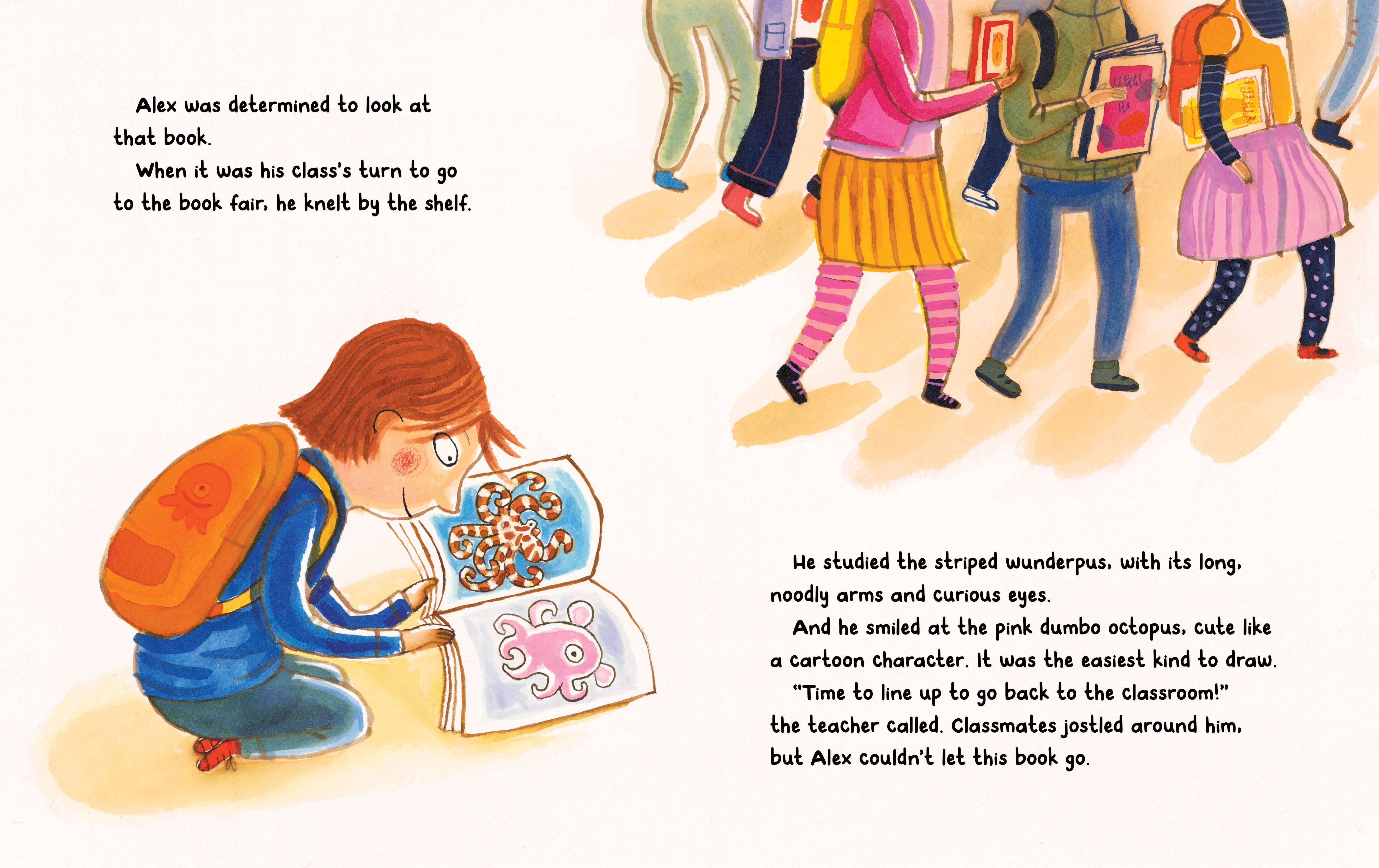
I didn’t write the character Alex as consciously stealing that book from the book fair. For a lonelier kid who gets absorbed into his special interest, a book about his favorite animals was overwhelming and present and seemed right and perfect, until later, when he realizes what he’s done. This feels more emotionally true to childhood for me than believing that Alex consciously knew it was wrong and stole that book anyways.
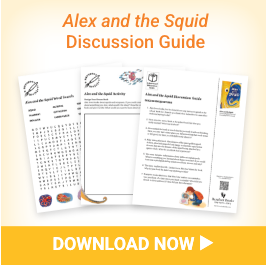
Download the Activity Pack!
About the Author

Meghan Wilson Duff wanted to be a marine biologist when they grew up, but got distracted trying to figure out people and became a clinical psychologist. Meghan's debut picture book is How Are You, Verity?
When not writing for children, they teach undergraduate psychology and provide autistic-affirming professional development for schools and mental health professionals. They live in Bangor, Maine, USA. MeghanWilsonDuff.com
About the Book
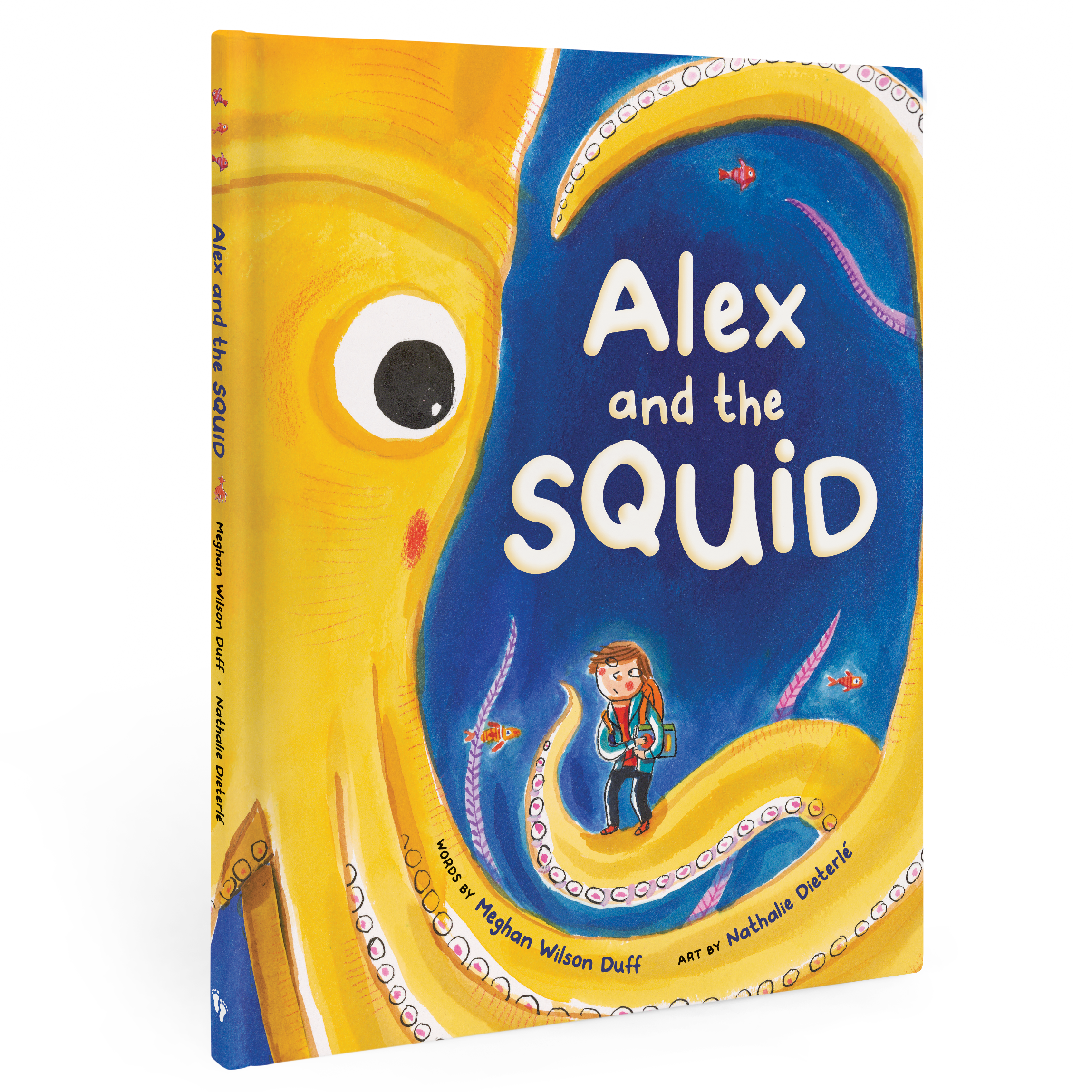
Alex and the Squid
Written by Meghan Wilson Duff
Illustrated by Nathalie Dieterlé
★ "An insightful book about honesty, integrity, and marine life" – School Library Journal
"A sensitive, empathetic take on the moral quandaries of childhood" – Kirkus
"A thoughtful picture book that explores guilt, curiosity, and honesty through imaginative dream sequences and expressive artwork" – Booklist