







Some Days I’m the Wind: My Illustration Process and the Concept Behind the Art
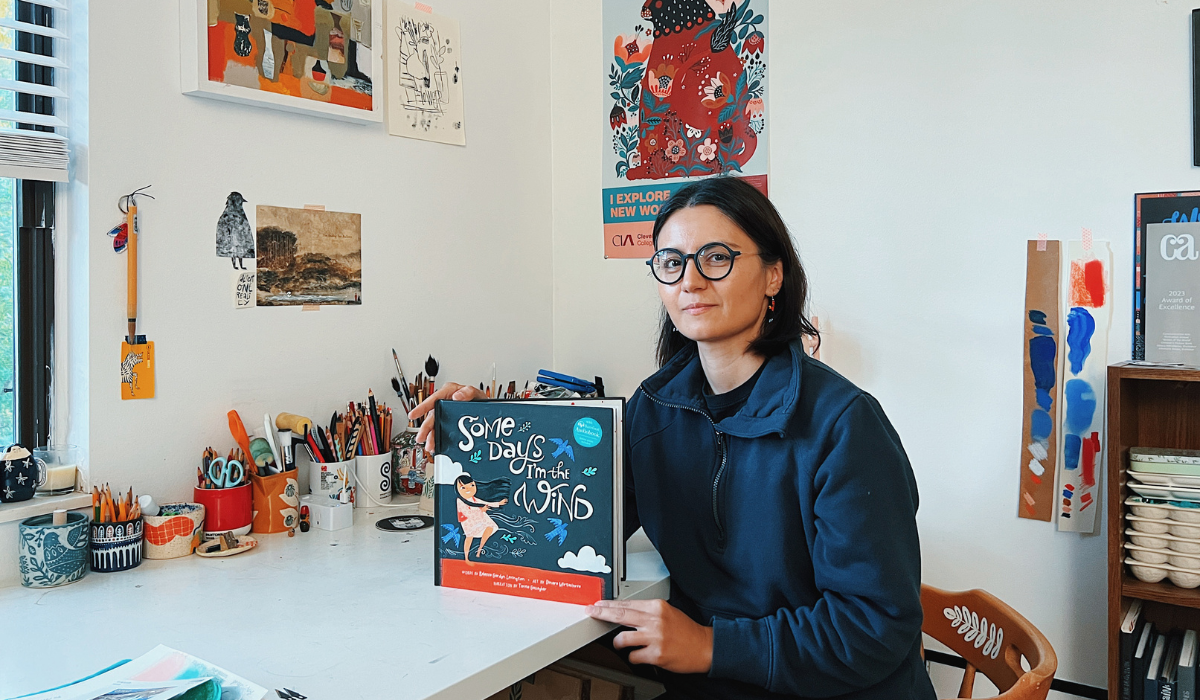
Dinara Mirtalipova is an award-winning artist influenced by traditional folklore and classic fairytales. Her new picture book, Some Days I’m the Wind, follows a young girl as she explores all sides of her emotions and personality.
When I first read the manuscript for Some Days I’m the Wind by Rebecca Gardyn Levington, I was immediately charmed. The writing was so beautiful and poetic, rhythmic, full of feeling. It spoke to something I believe deeply as a parent – that all emotions are valid emotions, there is no right way or wrong way to feel. Children should be free to express themselves, without shame or fear of being judged. Reading that in someone else’s words felt reassuring, it reflected my own parenting style, and I knew right away I wanted to be part of this book.
The manuscript used nature and weather as a way to describe emotions. One line reads: “Some days I’m the wind, a cyclone, a whirl, dizzy, giddy, wild.” When I began working on early sketches, I first responded to the words very literally. My initial instinct as an illustrator was to draw what the text described: wind, rain, sunshine.


But the more I developed the visual story, the more I realized that something deeper was needed. The words were already doing a wonderful job describing mood and movement. I didn’t want to just repeat that. I wanted to show what those moods feel like from a child’s point of view.

That was the beginning of my second stage of visual development. I started to think about the emotional world of a child, not just what they feel, but how they make sense of those feelings through imagination and play. I thought about my own daughter, Sabrina, when she was little. Like most kids, she played everywhere all the time, and even though we went to parks and played outside, most of her imaginative play happened at home. She would turn the rug into a river, the ironing board into a surfing board, the floor into lava, a pile of laundry could become a mysterious mountain, a chair into a secret cave, or a pile of laundry could become a mysterious mountain.

Those memories helped shape the concept of my approach to the illustrations. I realized I didn’t want to send the character off to some faraway imaginary land. I wanted to keep her in a space children know well, their home, and let the magic come from how she sees her world. The idea became: imagination in the everyday. The transformation of ordinary objects– like laundry baskets, rugs, poufs – into dreamy landscapes became the heart of the book’s visual storytelling. I wanted children to recognize those items and feel that they too can turn anything around them into something magical.
As the book came together, I began to understand that Some Days is not just about moods. It’s about emotional range. It’s about being more than one thing at a time. Sometimes calm, sometimes wild. Sometimes light, sometimes heavy. And that’s not only okay, but it’s also beautiful. My goal was to create a visual story that shows those contradictions and makes space for them.

The Role of the Illustrator
People often imagine that the illustrator’s job is to draw what the words say, but illustrators have more responsibility than that. If the text reads “I’m the wind,” and I just draw wind, it wouldn’t be imaginative enough for me. What excites me about the illustrator’s role is that it adds creativity and thoughtfulness to the story. The author writes with words, I write with images. I see myself as a visual co-creator. My job is to build a visual world that adds another layer to the story, something that isn’t directly written in the text.
In Some Days, the illustrations tell a parallel story. They don’t explain the words, they deepen them. Sometimes they add contrast. Sometimes they offer metaphor. And sometimes, they gently reveal something unspoken. I believe children are smart readers, they notice things adults miss. So, I try to leave space in my pictures for them to wonder, interpret, and make connections on their own. They invite the reader to see beyond the obvious, to feel what the character feels in a way that words alone can’t fully explain.

Making the Pictures
I painted all of the artwork using traditional materials like gouache and pencil on paper. I love the slowness of working by hand. It gives me time to think, to breathe, to make mistakes and follow them. I believe the textures and imperfections of handmade art invite the reader to slow down too, to pause on a page, to notice the brushstrokes or the tiny pencil lines. There’s a warmth to traditional media that I think fits this story well.
I also don’t believe in being too perfect. I don’t count every toe or measure every finger. To me, picture books are about feeling, not precision. I want the art to communicate a mood, a memory, a sense of truth, not a technical drawing. When I look at the finished book now, I see a world full of movement and softness. A world that’s emotionally alive.

Looking Back
Now that the book is finished and in readers’ hands, I can see more clearly what Some Days I’m the Wind is really about. It’s a book that honors complexity. It says: you can be quiet and loud. Gentle and wild. Joyful and sad. And all of that is okay.
My hope is that readers—both children and adults—see themselves in these pages. That they feel understood. And that they’re reminded that the world is full of emotion and imagination, even in the smallest corners of home.
Calling educators & caregivers!
Are you looking for more ways to engage with Some Days I’m the Wind? Bring the book to life at home or in the classroom with our free resources! Download the discussion guide and coloring sheet.
About the Illustrator

Dinara Mirtalipova is an award-winning folk artist with a passion for visual storytelling and an admiration for cultures and craftsmanship. Influenced by traditional folklore and classic fairytales, she prefers to draw and paint by hand in bright primary colors with traditional materials such as gouache.
She currently divides her time between an Assistant Professor position at Cleveland Institute of Art and working on collaborations and commissions from her home studio in Northeast Ohio.
About the Book
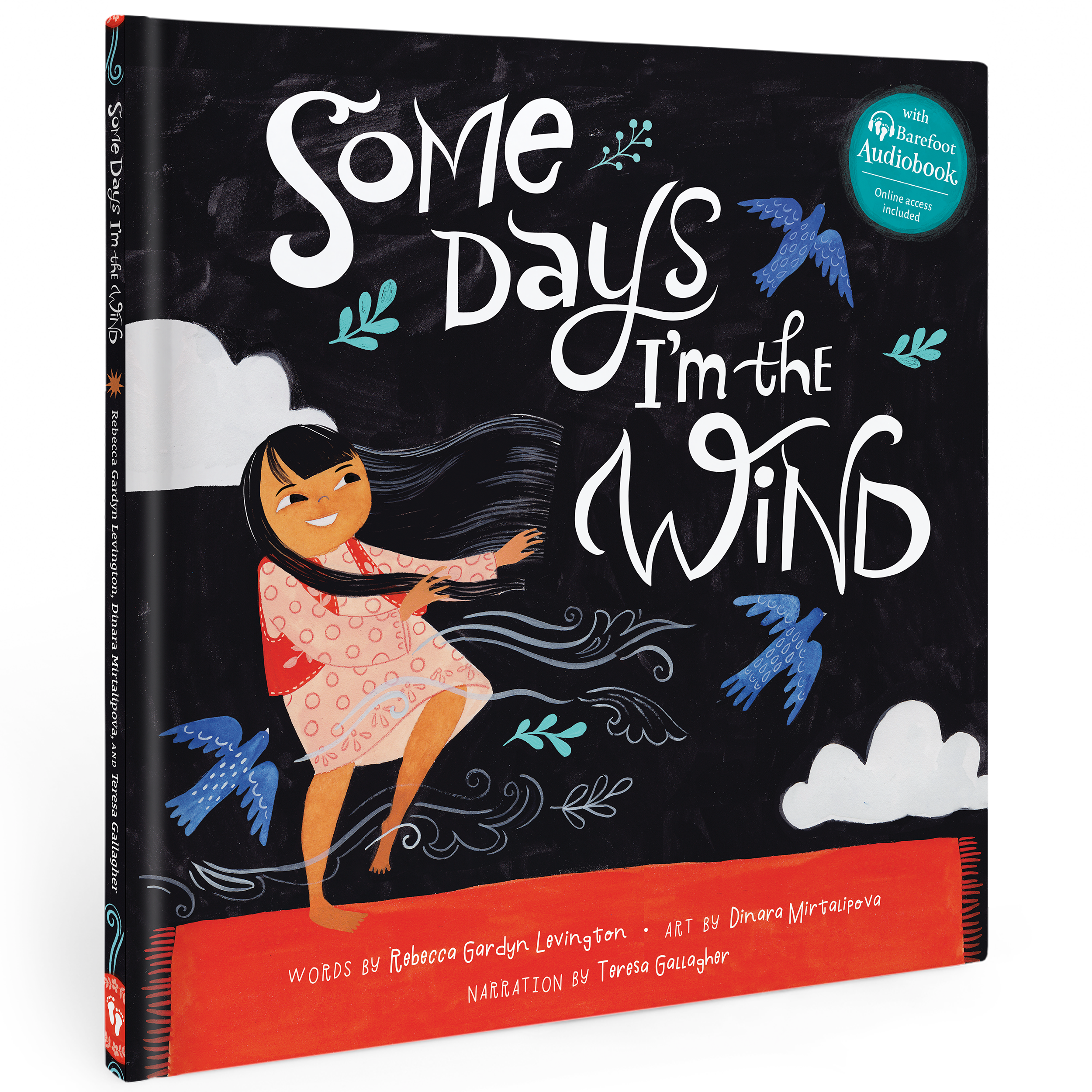
Some Days I’m the Wind
Written by Rebecca Gardyn Levington
Illustrated by Dinara Mirtalipova
★ "By following one expressive girl through wonderfully evocative art, this story celebrates both imaginative play and openness to all kinds of emotions." – Booklist, starred review
"A lushly illustrated, imaginative ode to a child’s rich emotional landscape." – Kirkus Reviews
"Imaginative illustrations evoke the gamut of human emotions in this picture book about understanding and expressing feelings" – Foreword Reviews