







All Thanks to an Acorn
Few things in this world are as full of possibility as an acorn. They’re tiny– some no larger than a pea – and yet a single nut holds enormous potential. It could become food for a squirrel or a deer or a turkey. It could be collected and processed and baked into something delicious by a patient forager. An acorn can be a nursery for insect larva.
Many an acorn have been plucked from the ground and hidden away in a pocket (including my own) where a fidgety thumb rubs it smooth over days or weeks or months. With skill, an acorn cap can become a whistle, echoing along a trail or across a park. And of course, a single tiny acorn can grow into a towering, leafy tree that sends its roots down into the earth, stretches its branches toward the sun and lives for hundreds and hundreds of years– sometimes up to 80 human generations!
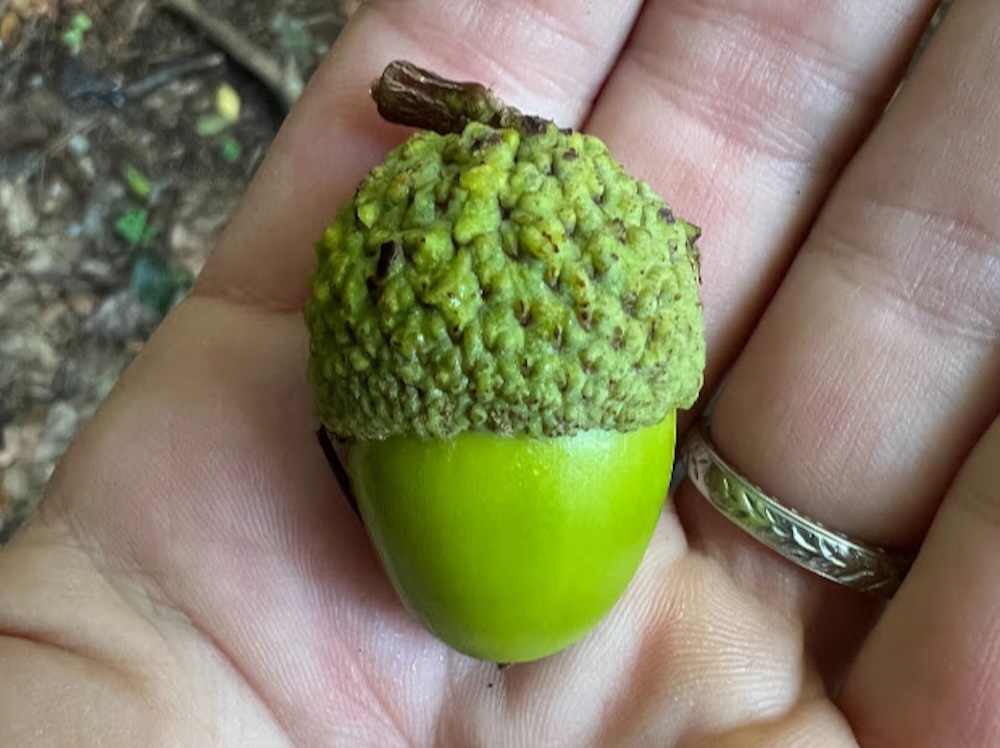
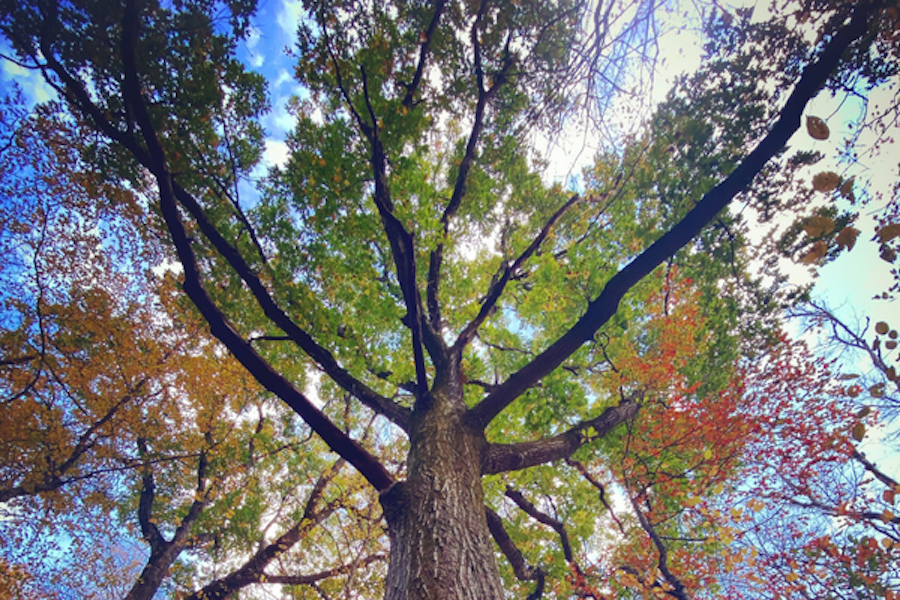
When we look at an ancient oak– or even just a regular oak perhaps striving toward ancientness– I think we mostly fail at seeing just how amazing they really are. An oak like the 400 year old tree I wrote about in Thank You, Old Oak, came from one little acorn and yet it is the center of an entire ecological community made up of hundreds of different species of insects, birds, mammals and other animals, lichens, fungi, and bacteria. And not only that, but each individual species the oak supports, whether with shelter, food, or something else, is supported over tens or even hundreds of generations and thousands of individual lives. All from a single tree!
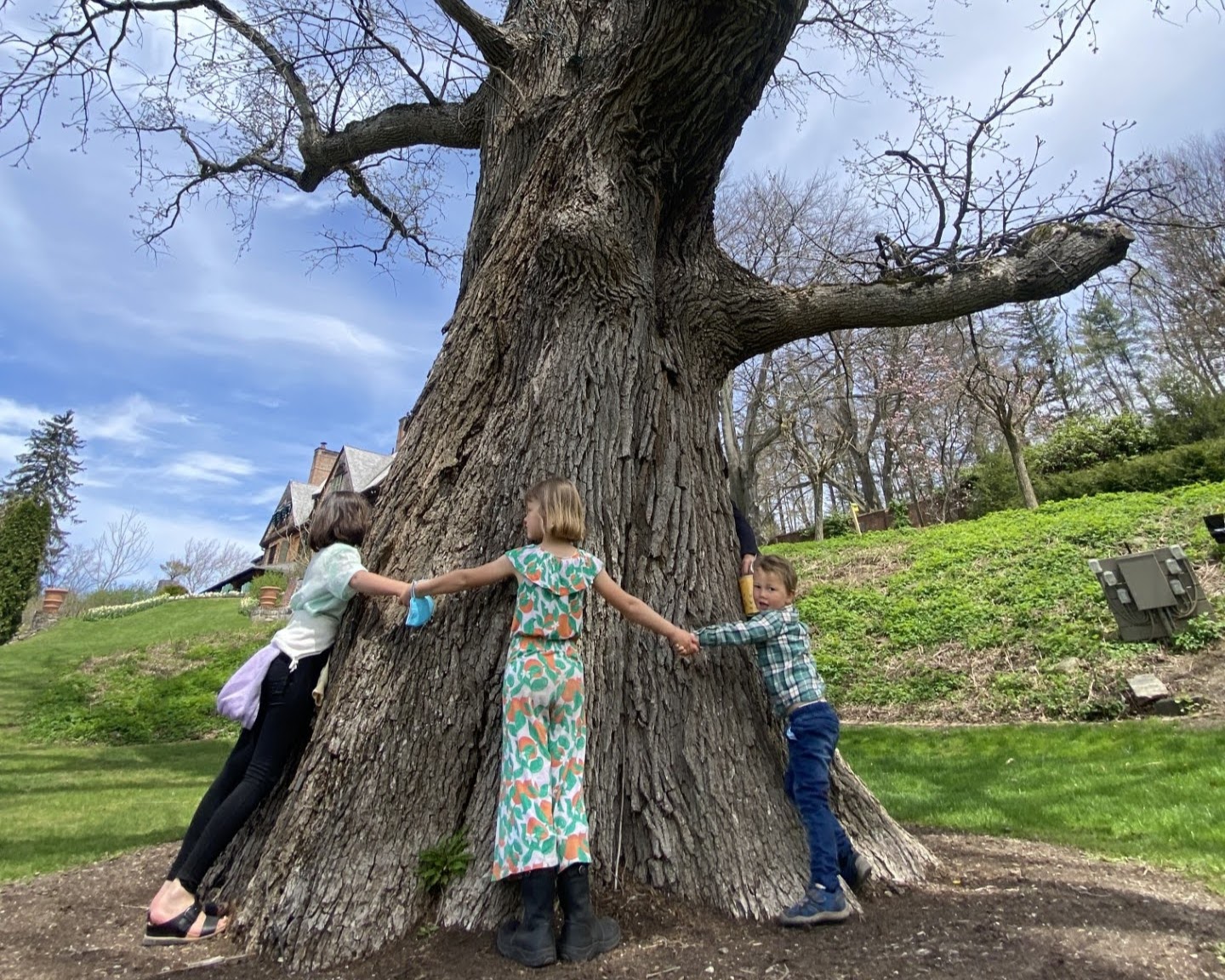
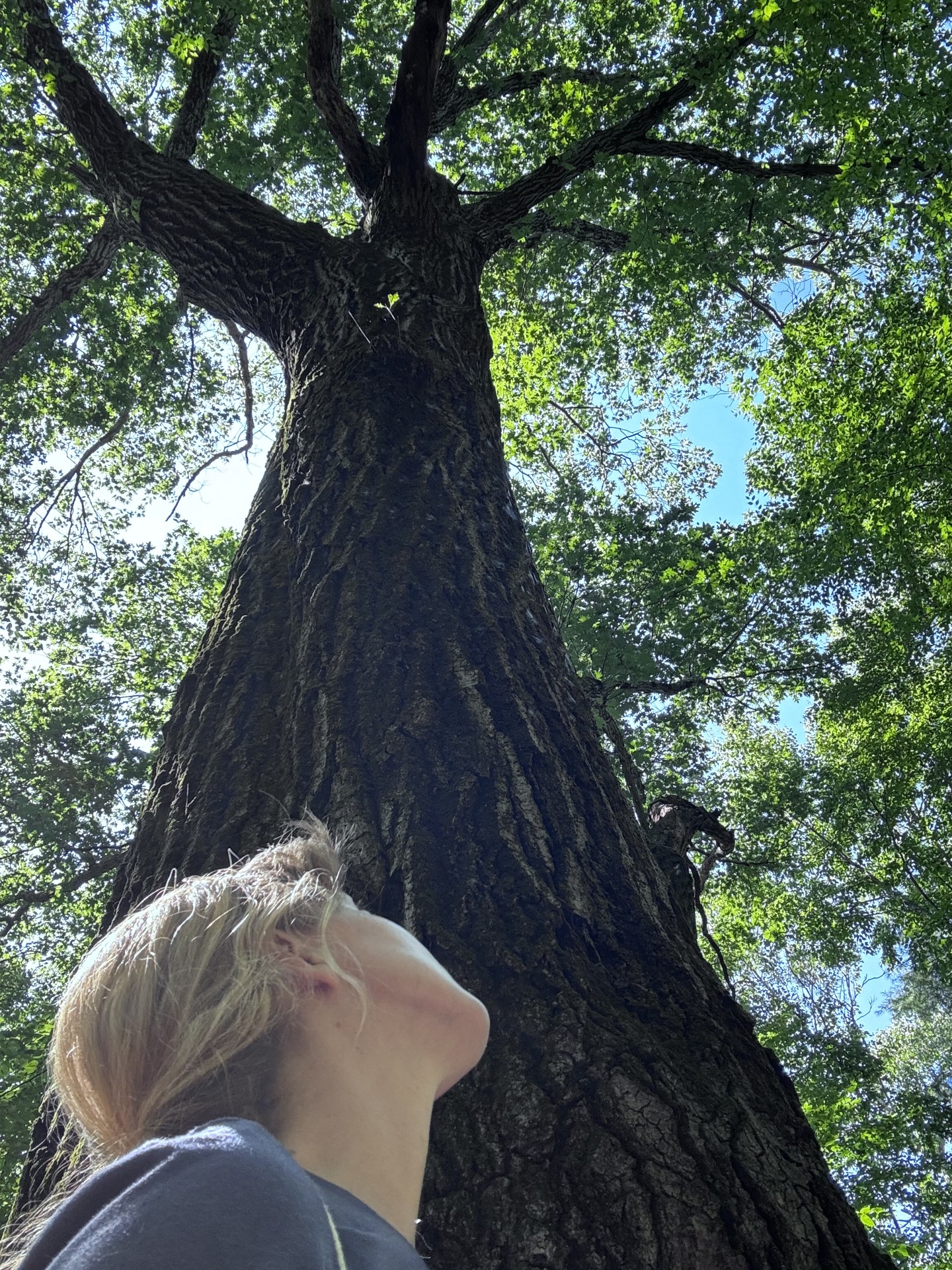
So when a single tree falls– as Old Oak does in the story– it might not seem like a big deal to most of us as humans, but it is. For me Thank You, Old Oak is a reminder that everything is connected and that each member of a community has a role to play in supporting everything and everyone around them. This is true for people, too. So if you ever see me– like a child– stretching my arms around a big, woody, bark-covered mega plant like an old friend, I am probably thanking it for the lesson on how to be in the world: like an old oak.
About the Author

Britt Crow-Miller's life has played out against the backdrop of incredible, old trees — from climbing their branches and enjoying their shade, to walking among their roots.
She now explores the forests and advocates for trees in western Massachusetts, USA, where she lives with her family and too many pets. In addition to writing, Britt also works as a professor of environmental geography and as an environmental educator.
About the Book
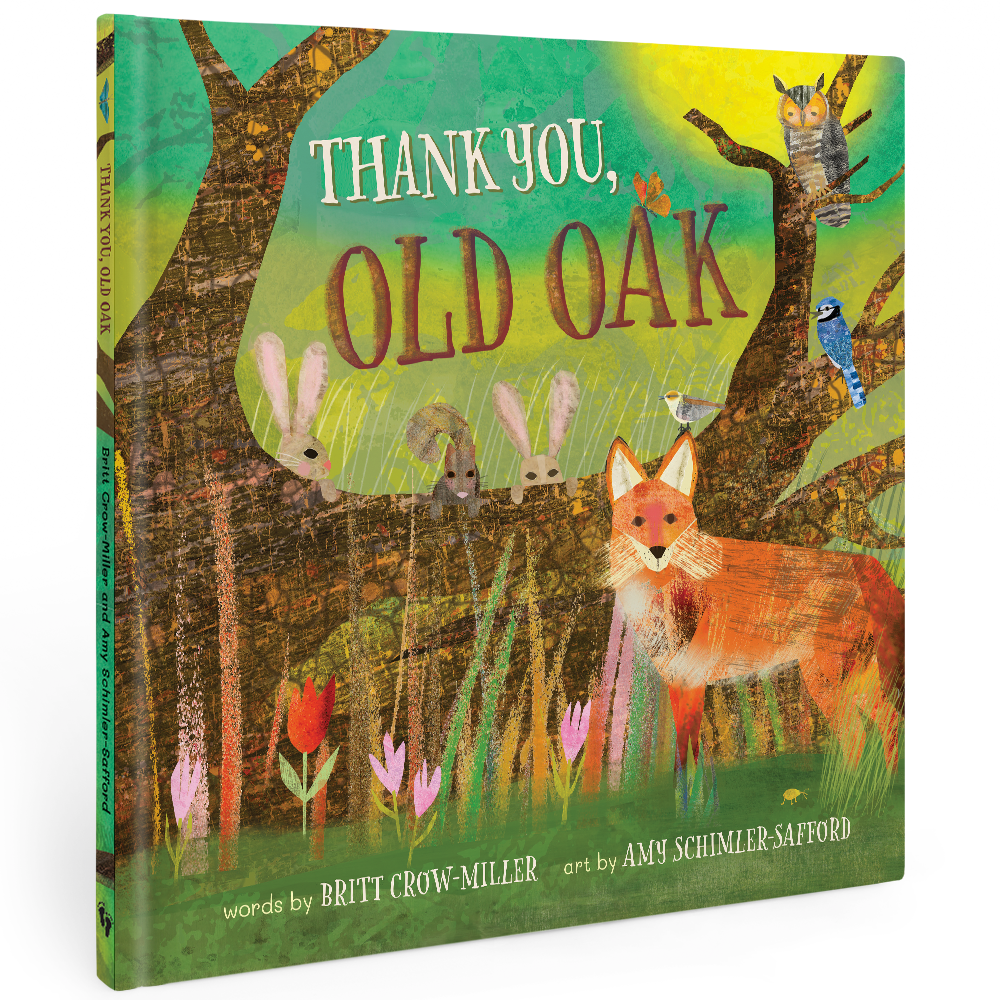
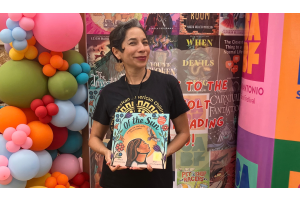
Thank You, Old Oak
Written by Britt Crow-Miller
Illustrated by Amy Schimler-Safford
"A arboreal appreciation, told with sensitive prose and detailed illustrations” – Kirkus Reviews
"This heartwarming ode masterfully evokes a deep sense of appreciation and wonder” – Becca McMurdie, Author of Building a Beak
“Crow-Miller imparts the ecosystem-wide importance of oak trees with poetic, sensory-rich text, and treats the subject of death with a clear-eyed sensitivity that children will surely appreciate." – Chris Baker, Author of On a Mushroom Day