






Teaching Information Literacy Through America’s Founding Myths
Our new nonfiction picture book, America’s Founding Myths… And What REALLY Happened!, takes a deep dive into 15 iconic U.S. history myths. Did Christopher Columbus really discover America? What really happened at the first Thanksgiving? Featuring silly speech bubbles, engaging infographics and interactive elements like gatefolds and lift-the-flaps, America’s Founding Myths is a must-have for history-loving kids and educators looking to teach kids about information literacy.
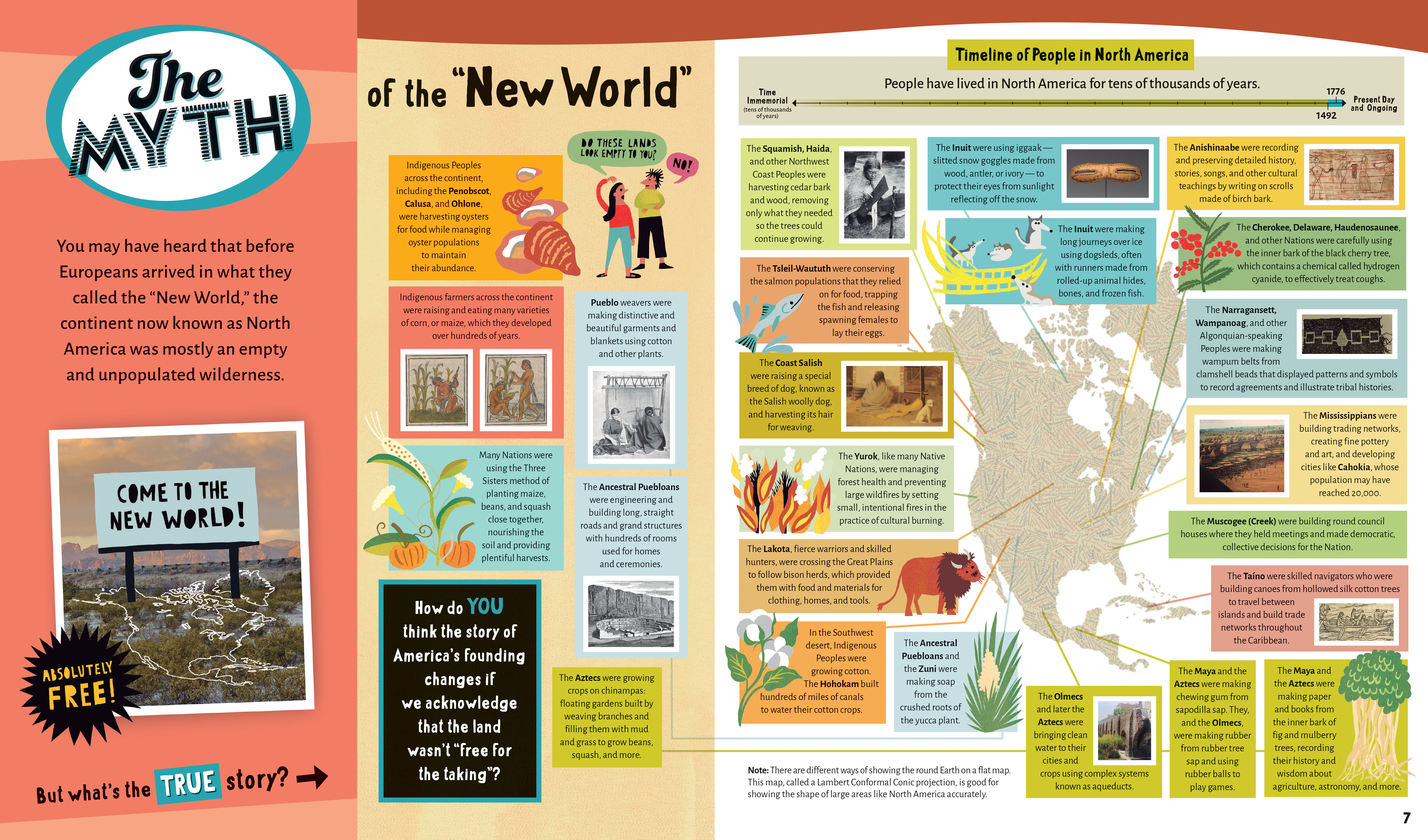
School Library Journal calls America’s Founding Myths a “visually dynamic, intellectually rigorous resource”, while Gregory Maguire, author of Wicked, praises it as a book that “teaches young people to practice the art of asking questions – not to shatter our national ideals but to provide a sounder foundation for them”. Exploring not only the truth behind the myths, but also where these myths came from and how they’re perpetuated, our book encourages kids to be curious, to think critically, and to evaluate their sources.
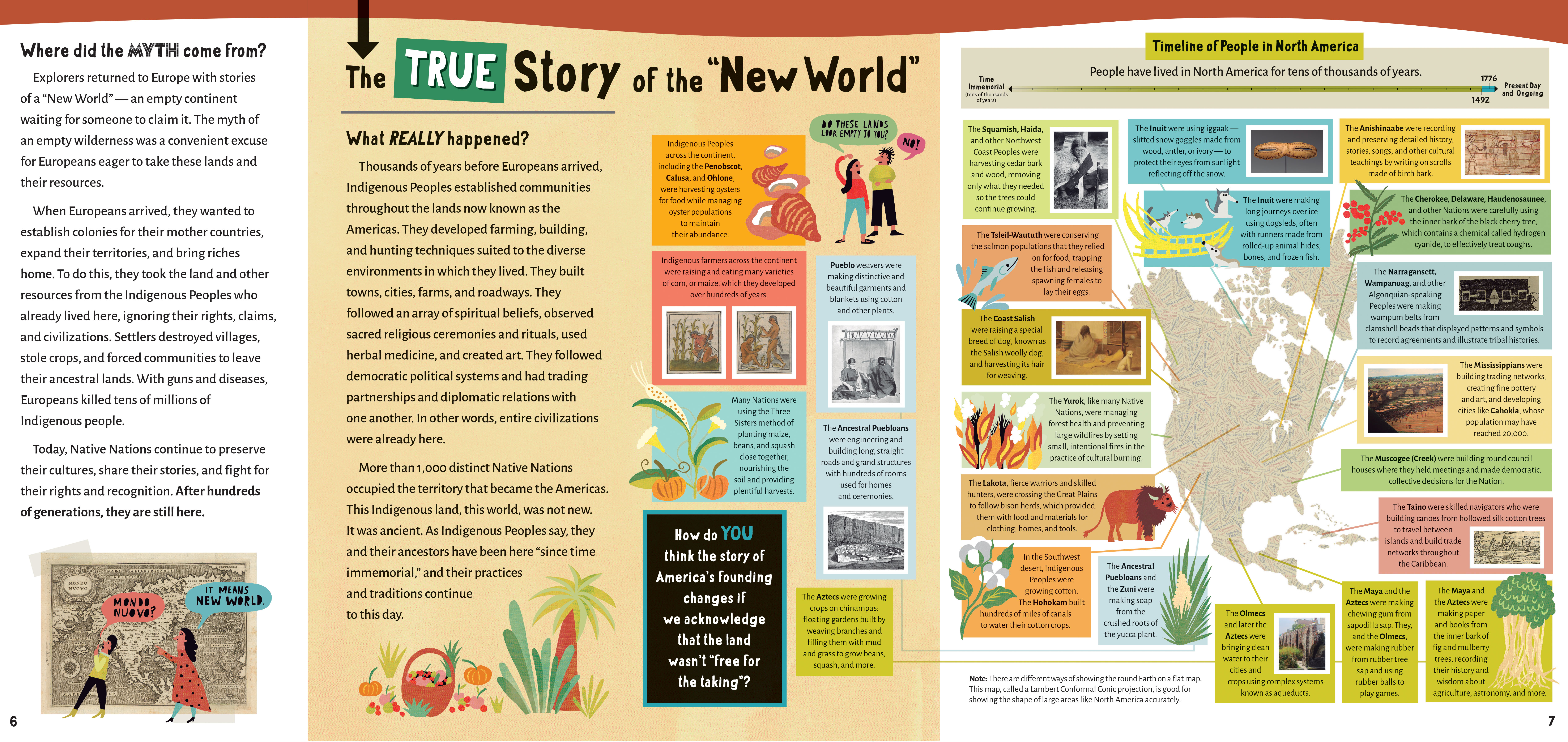
In the digital age, kids are encountering more information than ever before, across a myriad of platforms, and it can be difficult to know which headlines and sources are trustworthy. Today, information literacy is a survival skill – and America’s Founding Myths helps young readers learn to assess information and have fun doing so!
Having open conversations with others helps us see things from multiple perspectives. This is an essential skill when evaluating sources, making it easier for us to recognize when information is one-sided, misleading or inaccurate.
Try this activity with your students:
Start a discussion with an adult you trust. Ask them about a myth they believed as a child. Here are some questions you can pose using the example of “The First Thanksgiving”:
- Have you heard about the First Thanksgiving?
- What have you heard?
- Did you know that what really happened is:______________ ? (Fill in the gap here with what you know!)
- Why do you think the myth is so widespread?
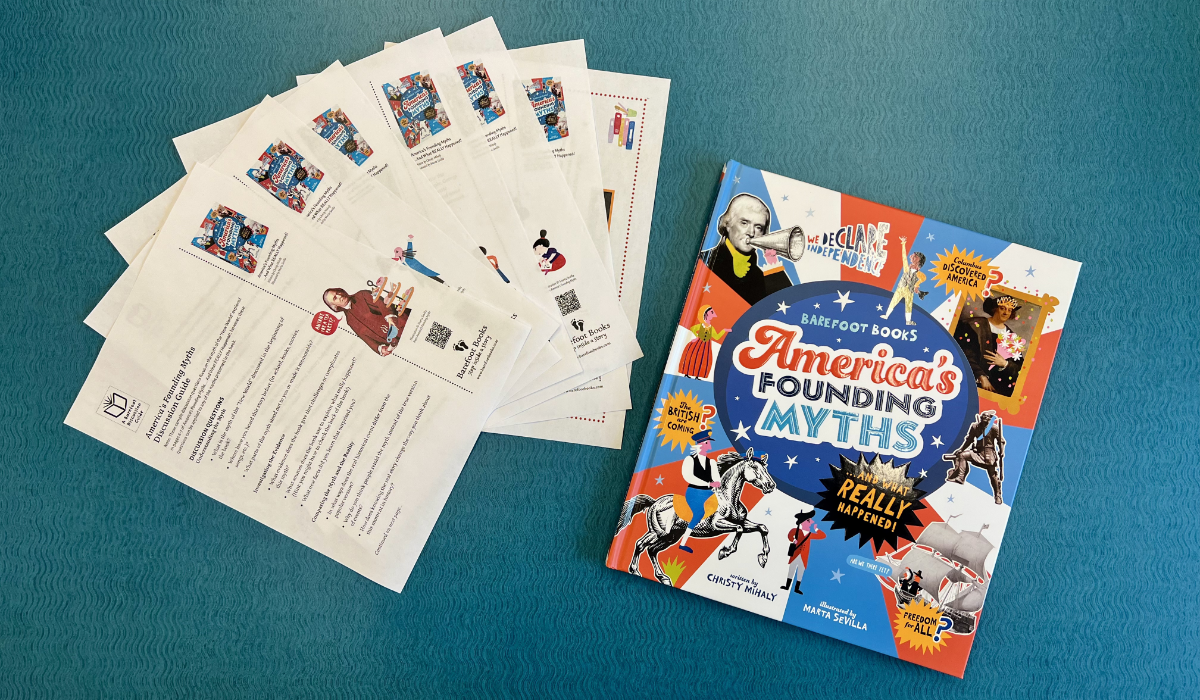
To further support kids’ learning, we’ve created an educator guide to accompany America’s Founding Myths. It includes a range of fun activities, challenges, and discussion questions that can be applied to any myth – those found within the pages of America’s Founding Myths and beyond. Questions like, “Why is it important to question stories that have been passed down over many years?” and “What clues can you use to tell if a story is based on fact, opinion or tradition?” empower kids to continue engaging with the book’s content, long after they have turned the final page.
Download the Activity Pack!
About the Book
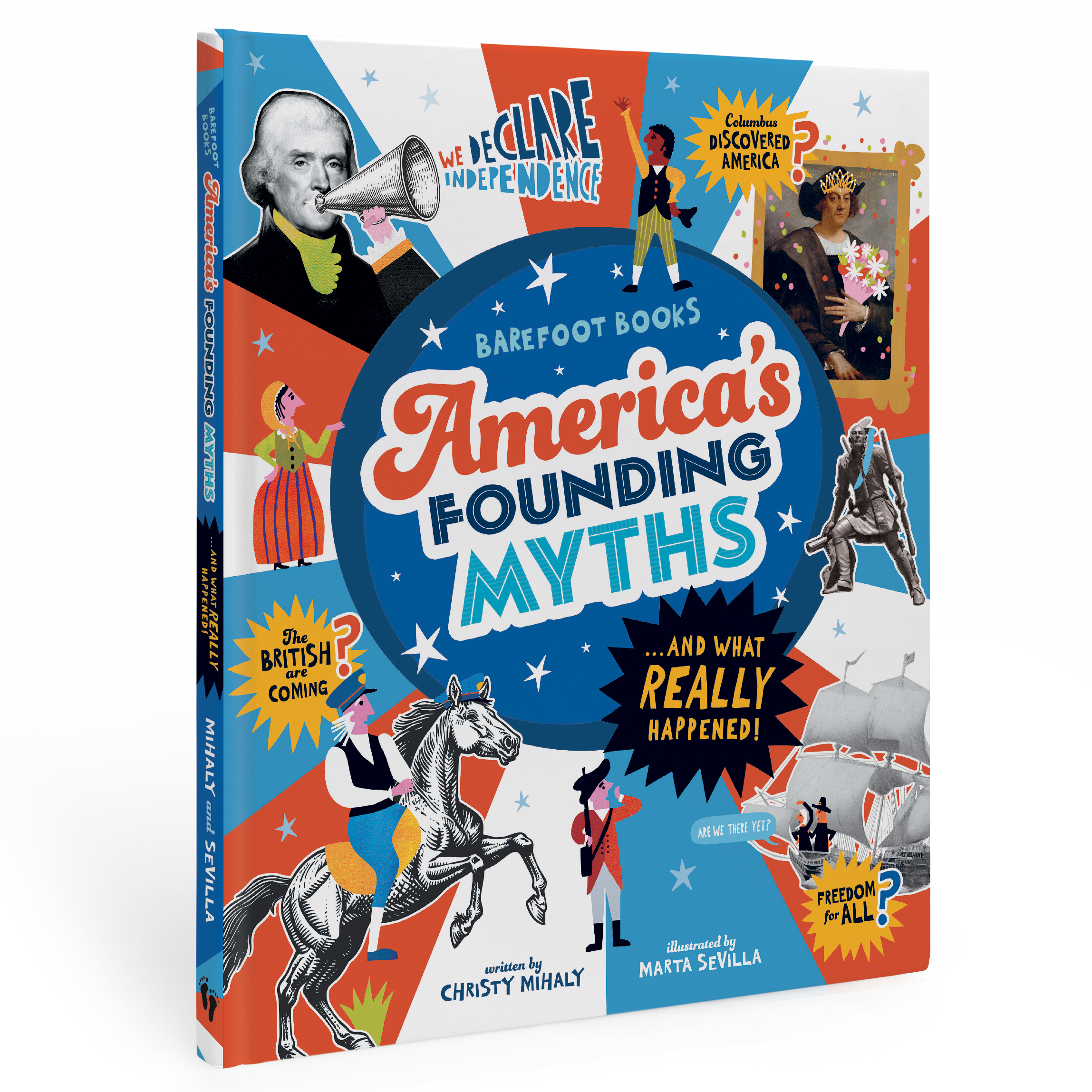
America’s Founding Myths…And What REALLY Happened!
Written by Christy Mihaly
Illustrated by Marta Sevilla
★ “Mihaly delivers refreshing doses of reality that will deepen any reader’s understanding of our nation’s complex history and values” – Booklist, starred review
★ “A visually dynamic, intellectually rigorous resource that challenges young readers to question historical narratives and recognize bias — essential for social studies curricula and media literacy instruction” – School Library Journal, starred review
“America's Founding Myths teaches young people to practice the art of asking questions — not to shatter our national ideals, but to provide a sounder foundation for them” – Gregory Maguire, author of Wicked