






A New, Wide-Lens Look at Bird Migration
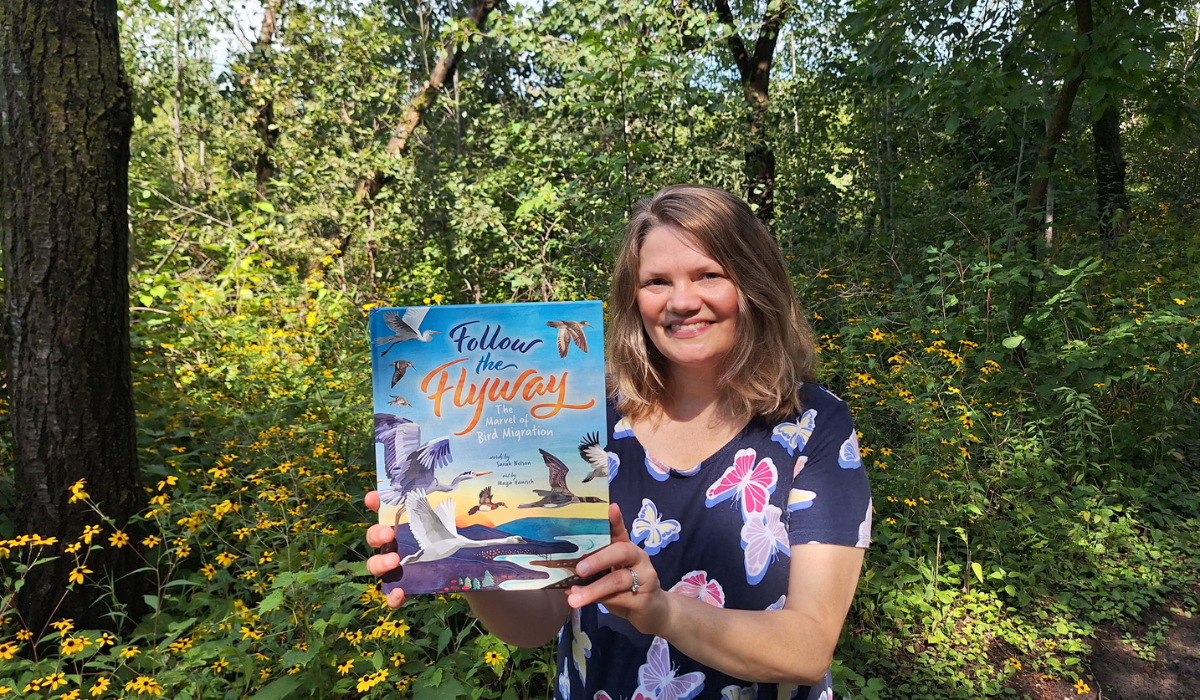
Sarah Nelson is a children’s author whose lyrical picture books are often inspired by nature and wonder. Her book, Follow the Flyway, follows nests full of baby birds as they hatch, grow feathers, learn to fly, and follow the autumn winds south along the majestic flyway for their first big migration.
It’s that time again! A new school year is launching. Outside, billions of birds are launching, too. They will travel across continents this fall, following the same shared and ancient air routes—or “flyways”—that their great-great-grandparents flew. Follow the Flyway: The Marvel of Bird Migration offers a unique look at this remarkable phenomenon and is a perfect book for autumn storytimes with lots of real-world and curricular connections.
I have lived much of my life along the busy Mississippi Flyway—the migration route for almost half of North America’s waterfowl. For many years, however, I knew nothing about flyways. My understanding of bird migration was rather simplistic, gleaned from textbooks and storybooks long ago. I knew that most migratory birds in North America flew north and south and with the seasons. I supposed that each flock took its own route, flying like the arrow.

After I learned about flyways, bird migration fascinated me. I saw the flyways in my mind like powerful jet-streams, filled with birds, more birds, flapping, gliding, swooping, soaring, connecting regions thousands of miles apart. Suddenly, bird migration was something much bigger and more astonishing than I had ever imagined.
As I began working on the story that became Follow the Flyway, I realized that most children’s books about migration reinforce and entrench that “arrow” story I once believed because they almost always follow one bird or one flock along its journey. It’s hard to get a sense of the whole marvelous feat of bird migration when zooming-in with such a focused lens on the individual. I wanted kids to see the big marvelous picture and to make connections, so I took a wide-lens approach instead. Follow the Flyway tells the story of the myriad multitudes, flying on a collective journey. They follow a food-and-water-rich corridor, steered by flock leaders and by memory, instinct, and the magnetic poles, “Like an invisible ribbon is pulling them.”
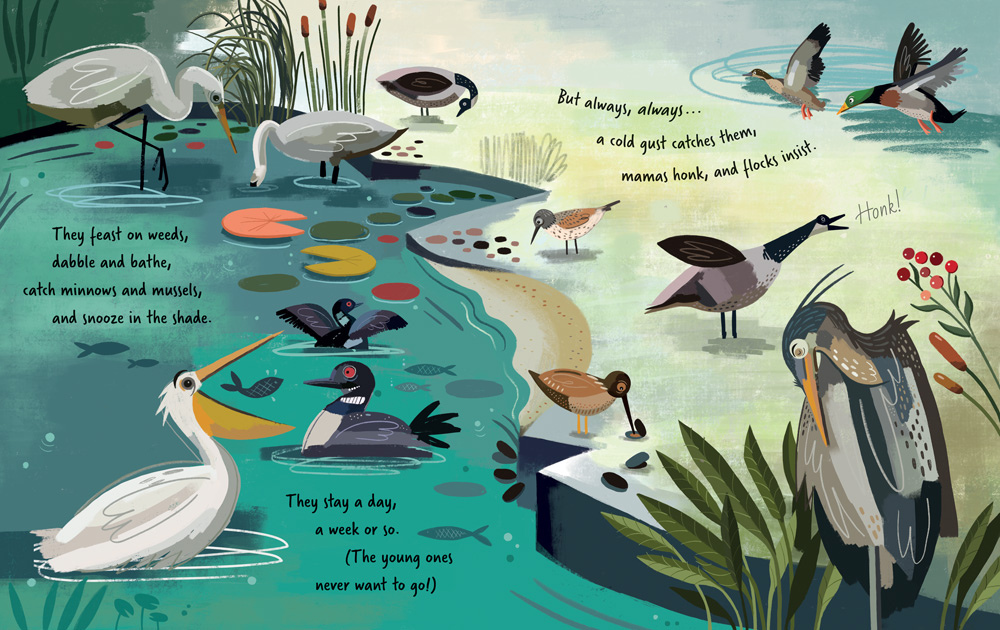
When we look through the wide lens, we can see how whole systems work. In terms of birds and flyways, looking through the wide lens helps us understand that bird species around the globe are moving in concert together along hospitable pathways of habitat. Indeed, habitat is the whole reason birds fly where and when they do.
Looking through the wide lens, we see that bird migration doesn’t happen solely in the sky. Instead, it’s happening all around us and in our neighborhoods. We live on the flyways. We share the same landscapes, waterways, and resources. We’re connected.
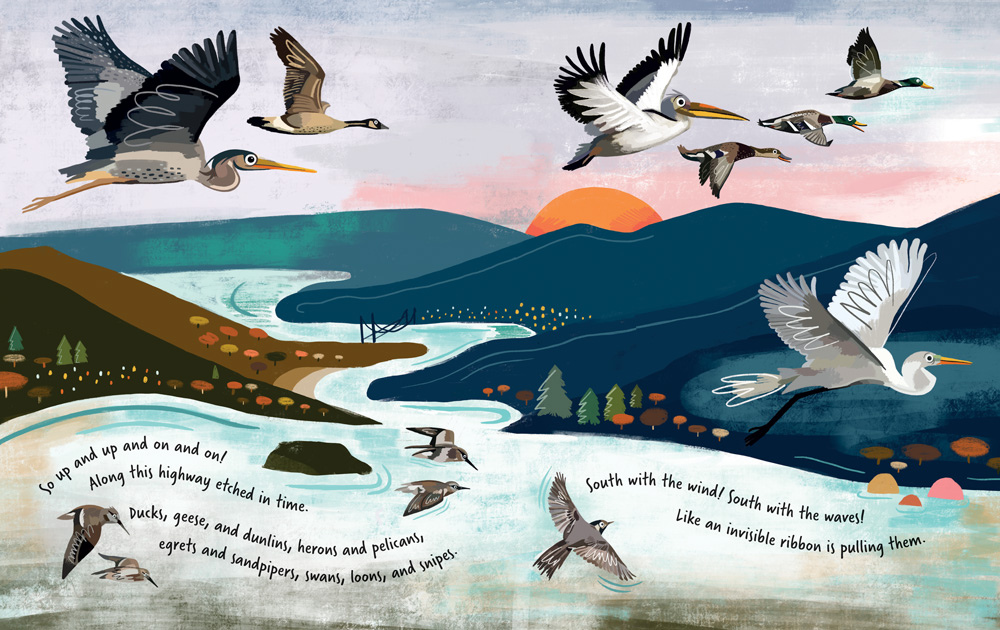
The flyways, in fact, tell a whole story of connection. The flyways connect the birds to one another and to the landscapes below, where birds feed and rest and weave their pretty nests. The flyways connect the birds to us, as well, and through the birds, the flyways link us to all that is wild and wondrous in the world.
I hope that Follow the Flyway enriches your back-to-school lessons and family storytimes this autumn. I hope it also inspires outings into your neighborhoods and parks. Look around for homey habitats and birds in flight. Notice all the wild and wondrous connections that are always around us. We live on a marvelous planet. There are endless reasons to love and take care of it.
About the Author
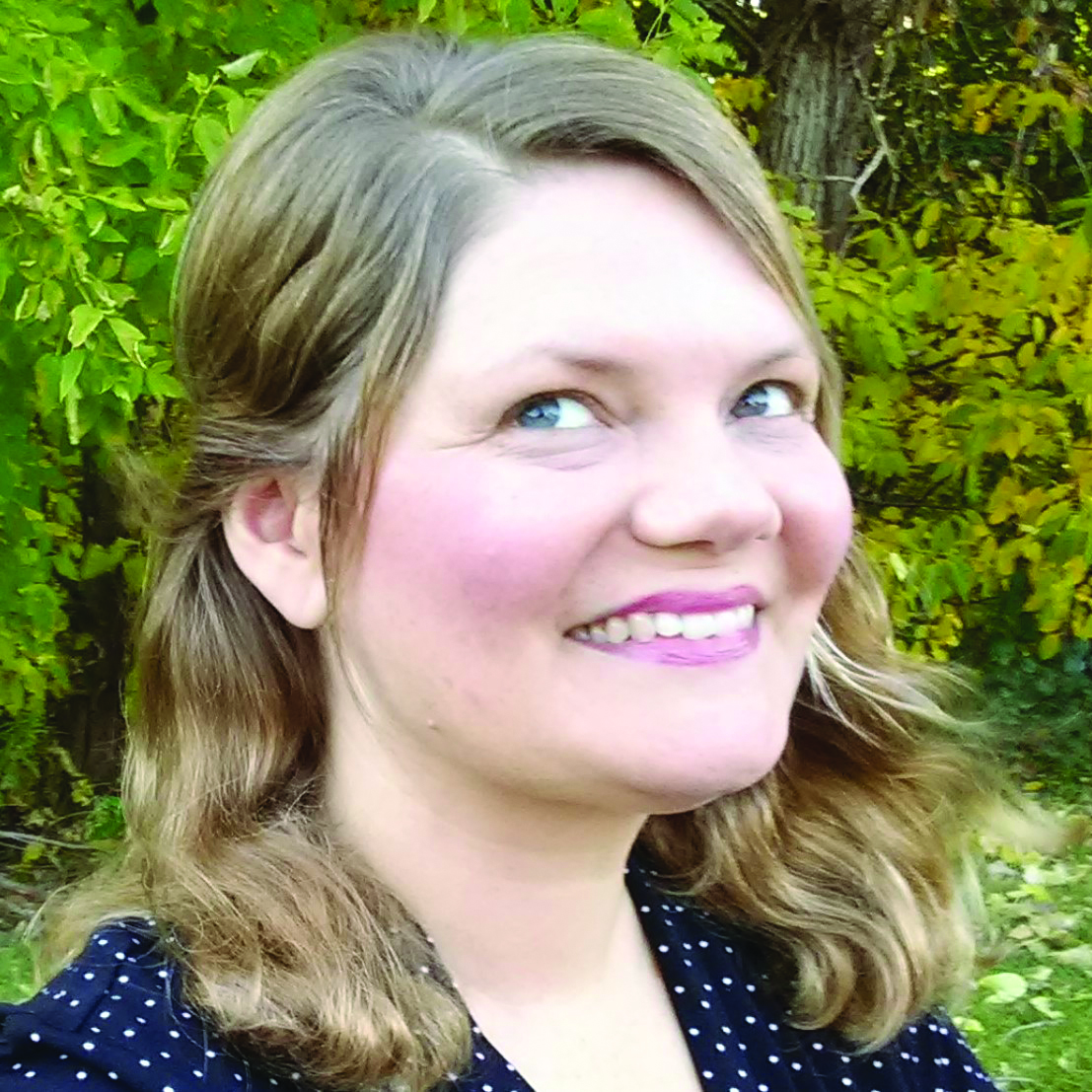
Sarah Nelson loves summer nights and firefly light. Her lyrical picture books are often inspired by nature and wonder.
Sarah’s titles include Follow the Flyway: The Marvel of Bird Migration and the I Like the Weather series, both published by Barefoot Books. She lives with her husband in Minnesota, USA where she teaches English and writing to adult immigrants.
About the Book
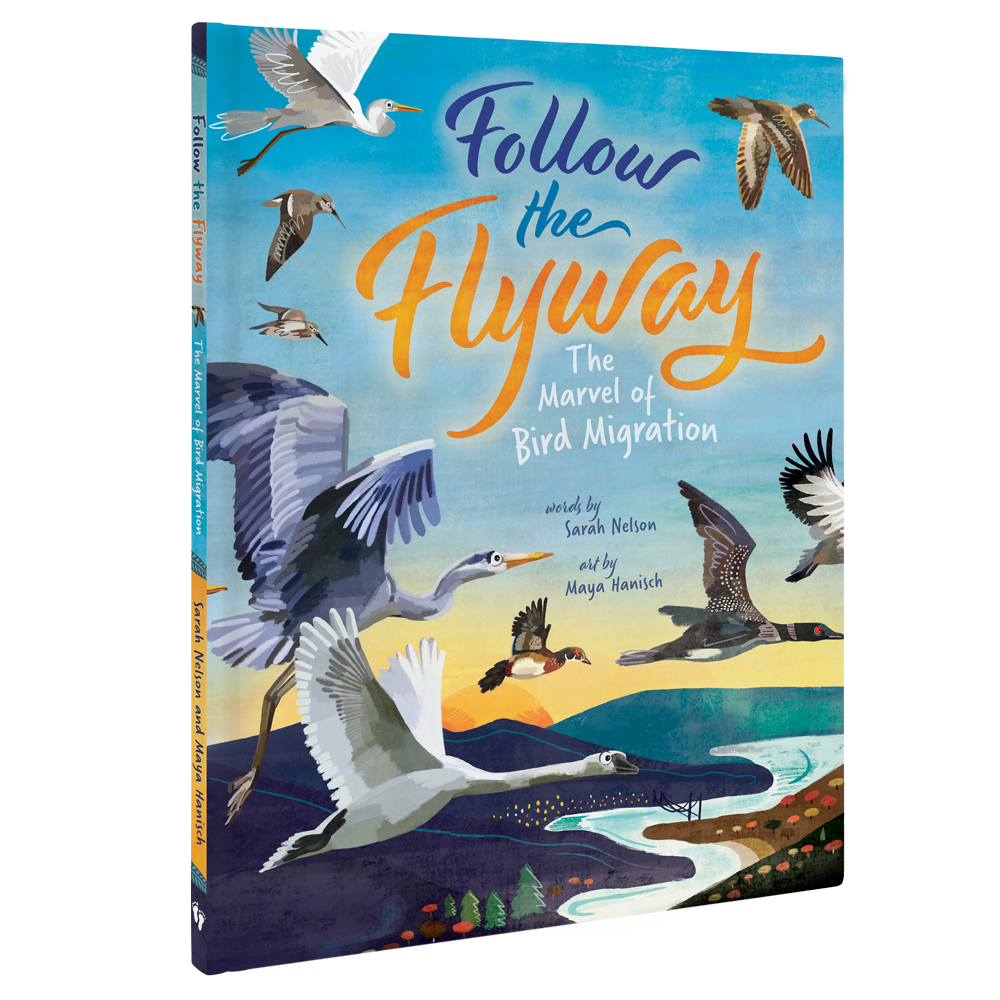
Follow the Flyway
Written by Sarah Nelson
Illustrated by Maya Hanisch
★ "An impressive use of rhythm, rhyme, onomatopoeia, and word imagery endows this science-based book with a strong literary component” – School Library Journal, starred review
★ "A charming beginning look at North American migration flyways” – Kirkus Reviews